In the years after Google’s big changes that put helpful, people-focused content first, things have changed. The times when pumping out lots of articles made by AI and seeing them jump to the top of search pages seem gone, but maybe not fully.
As an SEO professional, I want to speak about facts and move past the drama and worries. The simple reality is that AI-written content, even if people try to make it sound “human,” is under much closer scrutiny now. However, this does not mean AI cannot be used. It means we must not just do basic writing, but need to focus on smarter content improvement instead.
Google’s side: Helpful content and E-E-A-T
Google’s computer algorithms today are so advanced that they easily spot content that adds little, repeats too much, and is not really fresh. Their focus is mainly on E-E-A-T, which stands for Experience, Expertise, Authoritativeness, and Trustworthiness, as well as their Helpful Content System.
Content that just passes checks for copied writing and is slightly changed by a person really does not do enough. Google is not after content that only looks to be written by humans. What they want is writing that gives real value, solves someone’s problem and shows actual field experience.
Escaping the trap: strategic AI augmentation
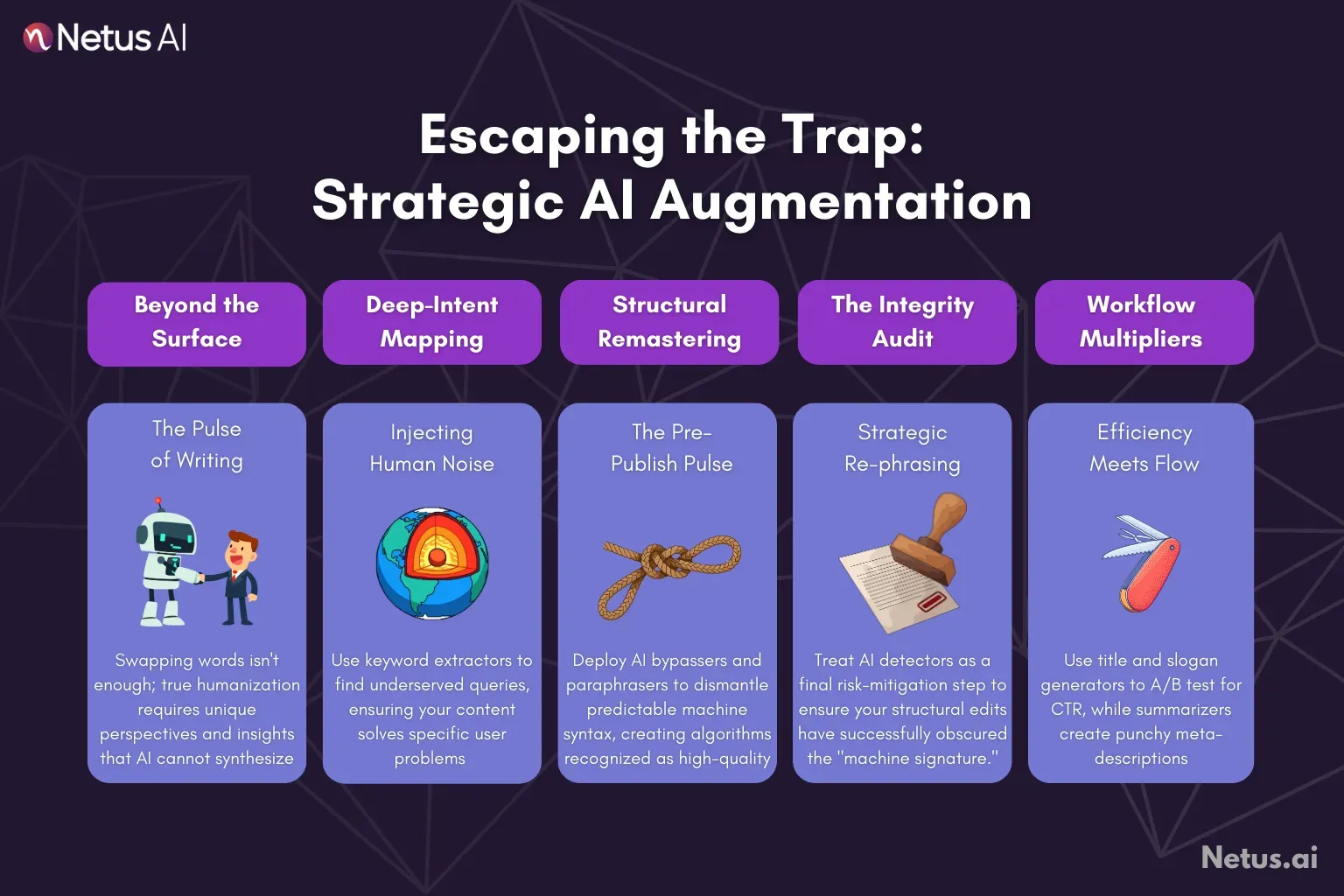
Lots of SEO workers are stuck in what could be called the "AI-Humanization Trap" . They use an article creator, change several words, and then say it is “human.” But this method does not deal with the real issues Google is seeking to fix:
- Missing unique view: Writing does not include personal stories or special details which a real person could add.
- Repeated structure: Writing follows AI-formed formats too much, making it simple for Google’s algorithms to treat it as not original.
- Low-quality keywords: There’s heavy use of general, widely fought-over keywords, but nothing about specific, detailed queries based on what people actually want.
Improving content for ranking in 2026
So how do we make AI work better without causing Google’s filters to flag our work? The solution now is in using AI tools in smarter ways to make human input much more useful, not to replace people.
Making high-value ideas and architecture
Before starting to write, it is vital to know exactly what to say. Creating a broad set of keywords that are long-tail and address true user needs is the main step. With keyword extractors, you can quickly research what rivals and search users are asking for, letting you find topics that are not yet well covered for your AI-involved articles. Using an SEO article generator to come up with a strong, detailed outline is a very good starting place, so all the points needed to promote E-E-A-T are listed.
Making content real and avoiding detection
Even with a strong outline, the first draft from an AI can still have repetitive patterns or an easy-to-spot machine style. To make content “human” enough to rank well, it is necessary to make significant changes to the writing style and sentence construction. This is where an AI bypasser and a high-quality paraphraser can do a lot. They reshape sentences, switch words up, and bring a more varied rhythm to the text so it is not trapped in a typical AI style.
But the last big action is checking your work. You must be sure the content is ready. By using an AI detector, you can test and have confidence that your hands-on editing is enough to cover the machine’s marks. This is a big last step and helps reduce the risk from Google’s algorithm.
Better content process for efficiency
SEO today is not a fight between AI and humans. It’s about smoothing out the Human-AI mix strategy. People bring their skills and judgment; technology offers the speed and productivity needed to keep up. You know, it’s the kind of future approach everybody must accept.
NetusAI: A unified place for content methods
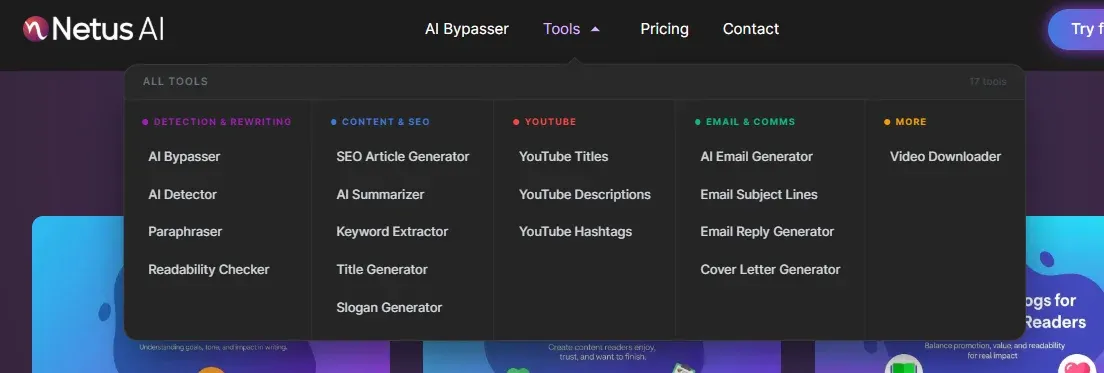
When it comes to making, humanizing, checking, and making content better, people usually have to use a lot of different platforms and need several subscriptions. This makes everything unnecessarily slow for the content team. But if you use something like NetusAI, which combines all tools needed into one, it becomes much easier and more useful.
With all this together, it is easier to move through each stage, which means groups that write content can go faster while keeping enough quality so Google's requirements in 2026 are not missed. Instead of seeing AI-based instruments as a way to cut corners, NetusAI treats them as helpful parts of the whole human editing step.
It lets SEO workers create their content fast but still makes sure it passes Google’s E-E-A-T and HCS (Helpful Content System) checks. With everything put into a single system, NetusAI turns what AI can do into content regular people actually want to read, which means it will be possible to rank high too.
Final comments
Right now, the debate over whether you can make AI-generated content rank well is over. It is entirely possible, but the adjustment must happen in a proper way, go deep, and always be focused on E-E-A-T. If people only want to use basic generative AI, it usually means being punished by the algorithm soon.
The secret, if you want to do well in AI powered search is, is that you need to create strong drafts using a purposeful toolset, then allow for serious human improvements, add unique knowledge, and finally, do a final check to see if your work will pass what Google sees as truly "human" writing. The instruments are not there for cheating but are more like boosters for professionals who know SEO.
FAQs
What is the main mistake that SEOs make when using AI content tools?
The biggest error is putting out content with little human checking and expecting that just changing small things will trick Google’s checks. If you want true humanization, you need to write new ideas, tell stories of unique experiences, and build the content in different ways that AI usually doesn't.
How many times should I use an AI detector on my content?
It is necessary to use an AI detector as a standard check on every page or article that was originally created or mostly edited by AI, and to do this before publishing it online. The detector is important to show if your manual edits still contain hidden signals of machine-generated text.
Does Google penalize content that uses a paraphrasing tool?
The search engine does not directly punish you for using a tool. It does punish if the information is not new, is low in value, or comes across as copied from other sources. If you make use of just switching words with a Paraphrase Tool and do not add your own insights, the content most likely will not rank even if you used the tool.
Is it safe to use an AI bypasser for long-term SEO plans?
The AI bypasser is fine for breaking up common text patterns from AI. For longer safety, the writing must always show actual human skill and offer something special. Leaning only on these tools without a strong human check is not good.
How can keyword extractor help E-E-A-T?
Keyword extractor makes it easier to find very specific questions users ask. By aiming for these niche, hard-to-find queries, you show that you have better knowledge and are more of a top source than just using broad topics, and your E-E-A-T looks stronger.