Modern AI writing tools have made creating content much easier, but have also created a big problem: how do you keep your content feeling like it was written by a real person when using so much automation?
For people who do SEO, this problem matters even more because there are rules from the search engines that care more and more about Experience, Expertise, Authoritativeness, and Trustworthiness (which people just call E-E-A-T).
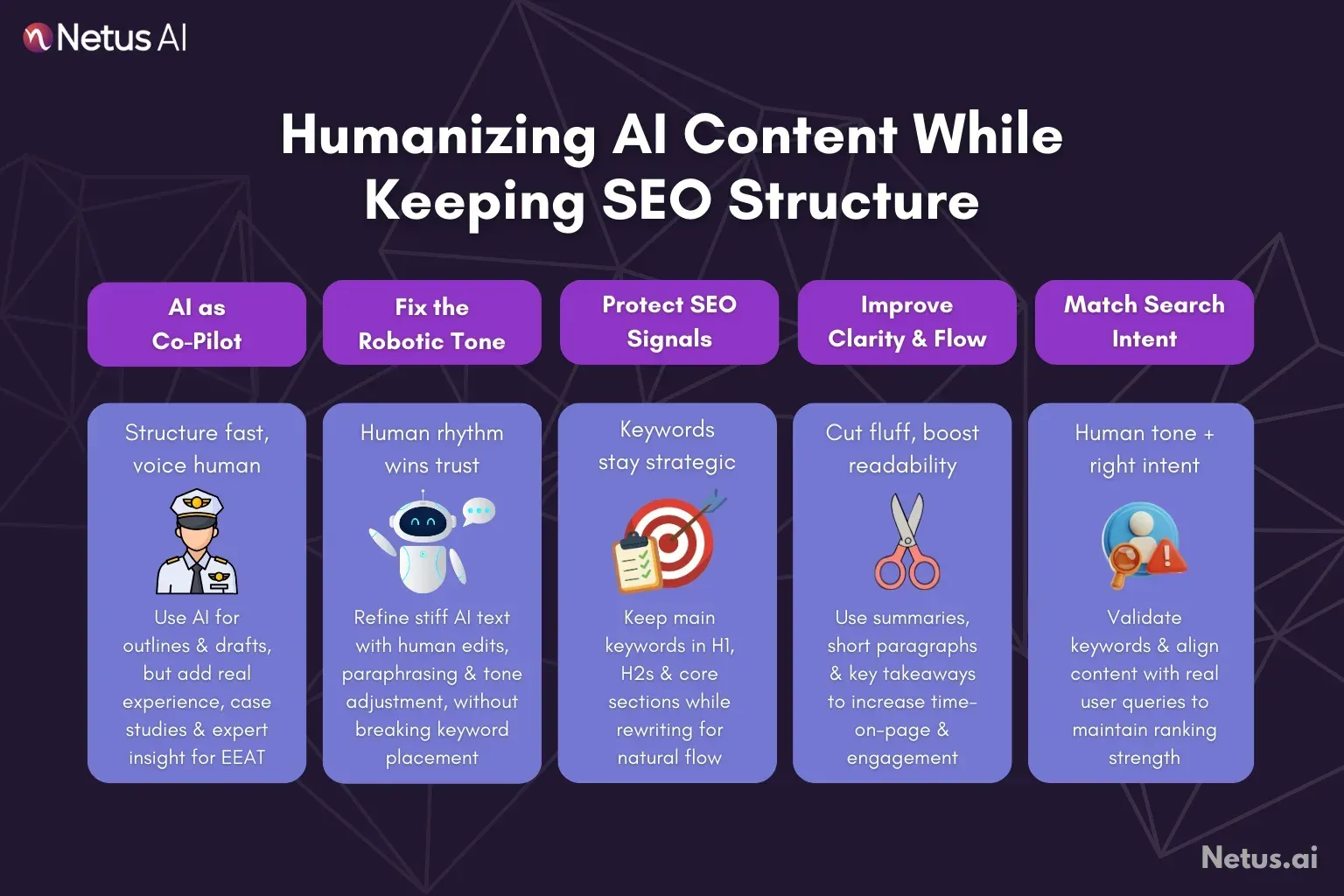
The plan should not be to get rid of AI, but to use it together with people, so it is a co-pilot of the strategy, not flying the plane alone.
What good SEO needs: Picking quality instead of quantity
Google’s main updates, especially the ones about useful content, make it pretty obvious that they want content made by and for people. Content that is low value and made by machines might get removed or ranked badly.
Still, AI’s fast speed and high efficiency are important too and hard to ignore. The answer is that after AI writes the first draft, a human must come after and fix things. This step is what helps the AI draft sound real, be right, and fit the SEO structure well.
How to start right: Use AI for structure, but not voice
Getting the most from an AI writing tool is possible by letting it make a strong outline for SEO very quickly. Tools such as the SEO article generator will take a target keyword and almost instantly produce an outline, subtopics, and even some first and last paragraphs. This whole process saves a lot of time in researching and organizing ideas.
To make it human
Right after the structure comes from AI, the person should add their real story, specific case studies, or special data only they know. This is called “Experience” for E-E-A-T, and this is one area where AI really struggles to sound real or natural.
Authentic and natural: Getting around robotic feeling
Now that search engines and even some readers are able to notice writing that feels just like a robot, it is more important to have content that seems like a person worked on it. If the AI draft has a stiff, repetitive feeling or does not get into deeper meaning, it’s more than a low-quality problem, it creates a problem of trust.
To ensure the writing flows naturally and passes checks for robotic text, you should work on it further and refine it without losing the most important SEO elements. Using an advanced AI bypasser or one of the paraphrasing tools can help in this step. These technologies can take the draft and return alternative versions with smoother rhythms, a broader vocabulary, and a more conversational style, so the machine-generated writing is concealed while the SEO message and keyword usage remain intact.
SEO Step
When changing the words, you should keep the main keywords at the top and inside headings, as your AI did at the start, so your SEO strength is not lost.
Make it Clear and Precise: Shorten for Effect.
For search ranking, having people read longer and without confusion is very important. When AI writes too much or says things in too long a way, visitors may get annoyed and quickly leave the page. Before posting content, make sure what you are saying is clear and to the point.
This is where an AI summarizer is incredibly useful. It helps cut large, messy paragraphs or rambling parts down to bullet points or short summaries that are easy to read fast. This makes the article easier for readers to scan and also tells search engines what your page is really about. Besides, it helps to write meta descriptions and social media posts based on your final article, made more human already.
How to use this in a structure?
Take a short summary and make a bold box of “Key Takeaways” near your article’s top. In this way, the reader gets quick value right at the beginning.
Getting found: Matching the correct intent
Even when an article sounds human and friendly, it can still perform poorly if it does not fit what people are searching for. AI can write on the topic in general, but the real SEO expert must check for exactly the phrases people type into search engines.
Keyword Extractor is needed both when you start and at the final checking time. Use it to study webpages that are winning or check your own improved draft to look for any good, specific keywords that match well with what users actually want. It makes sure your rewritten article can be found by the people who most want it.
NetusAI: Complete control center for your content
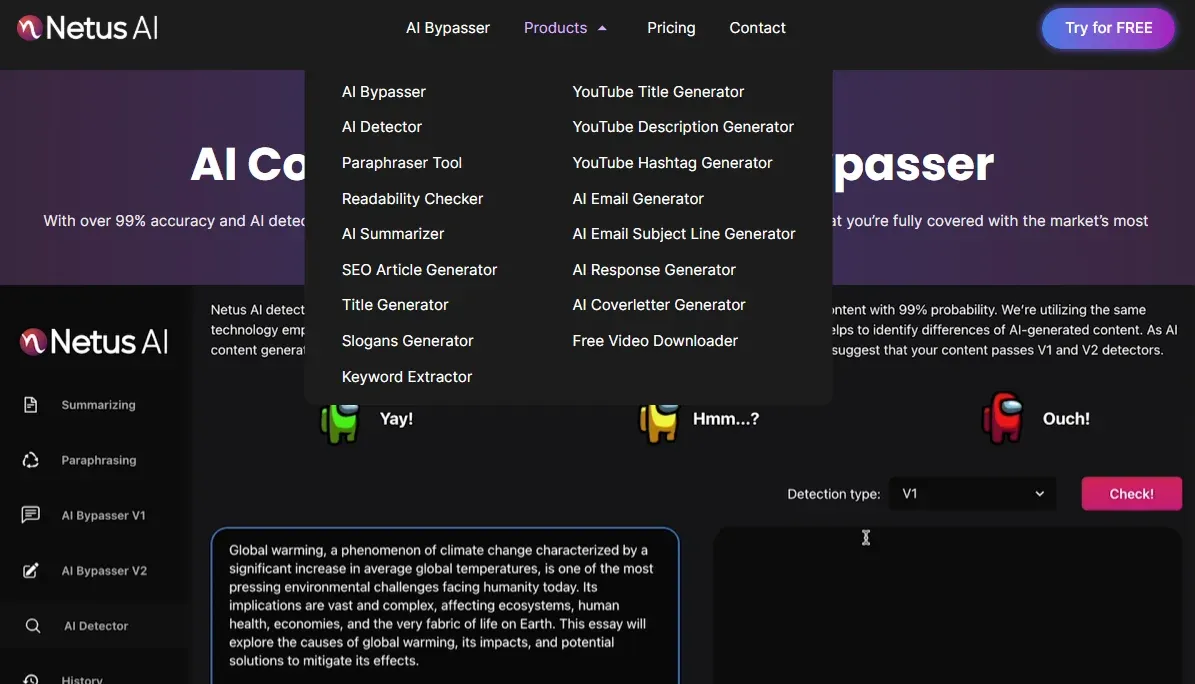
Managing how you create content using AI with SEO can be challenging without putting everything in one place. Trying to piece together different services, one to create content, another for paraphrasing, and the next for analysis, becomes inefficient, and mistakes can easily happen because of this setup.
With NetusAI’s collection of resources, the idea is to offer a smooth, all-in-one solution that is made mainly for today’s SEO workers.
The integration allows you to:
- Work with ideas
- Produce a draft that already fits SEO needs
- Change the language to be more “human”
- Shrink content where necessary.
- Check keyword usage
All this can be handled inside just one system. It not only makes the pipeline simpler but also ensures every content piece published is properly optimized by machines and confirmed by actual people as suitable. This means better outcomes in a world where search engine competition gets more intense.
Final reflections
The discussion involving AI content has turned from “AI or Human” into “AI with Human.” Getting good results in SEO will depend on machines doing important, basic work like speed and structure, while humans provide essential aspects like E-E-A-T, real voice, and expert review.
Using tools in a way that supports the human work instead of letting it be replaced makes it possible to produce content that pleases both Google’s systems and more demanding human readers.
FAQs
What is the main danger of using raw AI content for SEO purposes?
The largest risk lies in not passing Google’s Helpful Content System standards, which focus on content with high Experience, Expertise, Authoritativeness, and Trustworthiness (E-E-A-T). Raw AI writing misses individual insight and faces punishment for poor value or content made only by generator machines.
Exactly how does an AI bypasser really make content sound more human?
These tools function by scanning for patterns, repeated words, and the very formal style usually seen in large language models, then replacing them with different vocabulary, sentence lengths, informal expressions, and rhetorical devices that imitate how people speak or write naturally.
It is usually recommended that you plan to use the paraphrase tool or an AI bypasser at sections that are most generic or too “robotic,” like basic explanations or opening paragraphs that need changing. The main stepwise or technical parts should still be checked and added to by you with your personal knowledge.
How frequently should the Keyword Extractor be used in making content?
The tool should be applied two times: first, at the start, to help set up the SEO article generator with the correct keywords, and then again at the finish for checking, so the final version edited by people will fit all required search queries and goals.
Does AI summarizer substitute for making manual outlines?
The AI summarizer fits best for preparing easy-to-read “takeaway” boxes or strong meta descriptions after the content is already done. It helps with outlining but cannot totally replace human planning, which must remain based on human thinking and targeted strategy.