AI writing tools are rapidly entering content creation, tempting everyone from bloggers to enterprise teams to use AI-generated content to rank faster, cheaper and at scale.
Initially, there was excitement: AI was expected to instantly replace human writers.
Tools promised perfectly optimized, Google-ranking articles in minutes with no effort, delivering instant SEO success.
Even though there was plenty of initial hype around it, a debate is starting to take shape these days. AI content might not really stand up to skilled human SEO writers and it may not manage to rank all that highly on Google.
In the end, it could just lead to that kind of penalized, generic text that holds everything back.
Google puts a lot of weight on content that is helpful, reliable and centered around people. They really highlight E-E-A-T, which means Experience, Expertise, Authoritativeness and Trust. These traits tie right back to genuine human perspectives.
So far, when folks try out AI-generated content, the performance varies quite a bit. Some pieces climb the ranks nicely for straightforward searches. Others hit snags with indexing or simply do not keep readers hooked.
The SEO content creation earthquake
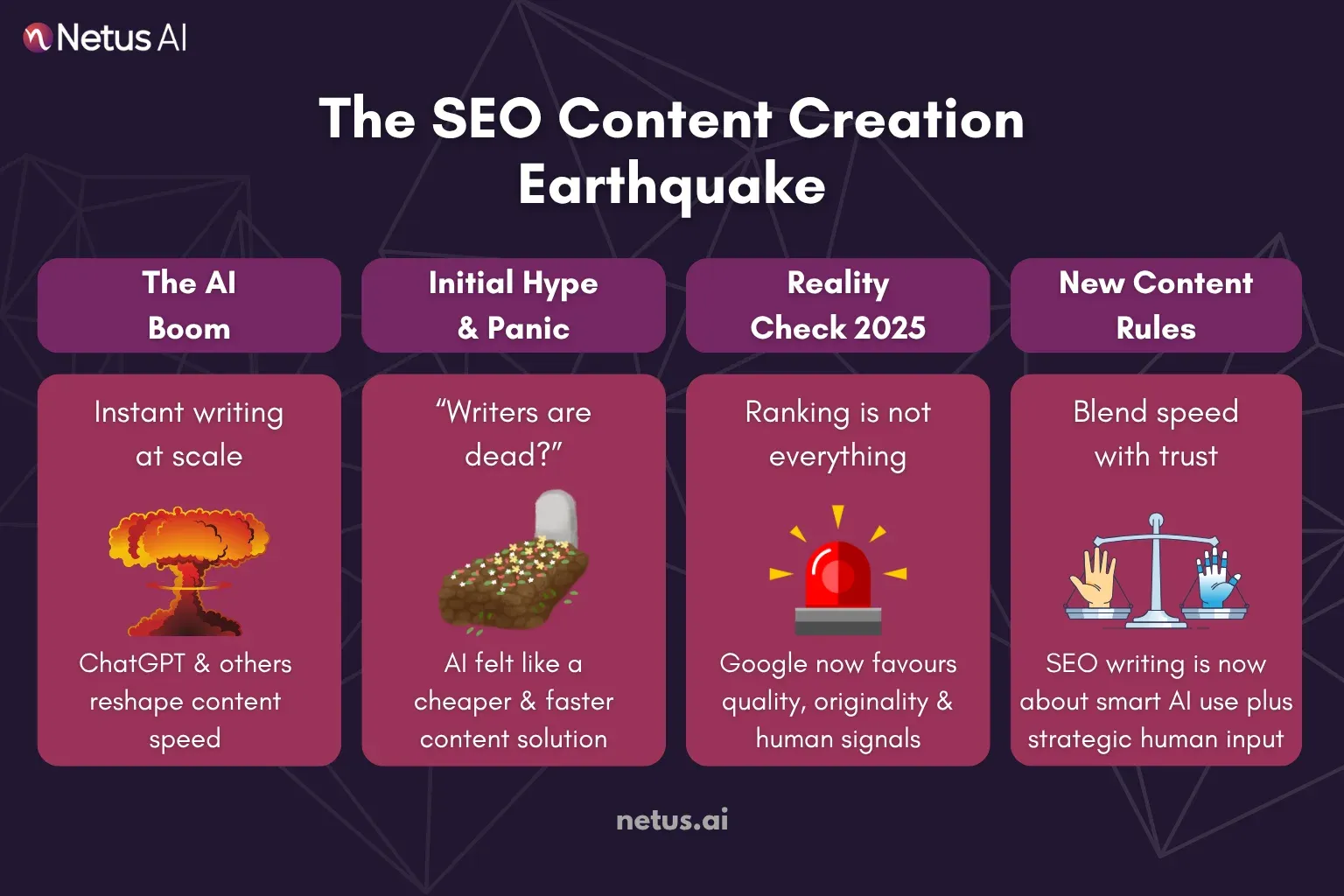
AI writing tools like ChatGPT and Jasper have shown up fast in recent years. They let just about anyone generate huge amounts of text right away, no matter the topic.
This big push in technology gives businesses a key way to handle heavy content needs without big budgets.
The Allure:
- Unmatched speed & scale: AI can rapidly generate high-volume content, like 50 product descriptions or a 2,000-word blog post in minutes, a scale previously requiring huge teams or budgets.
- Cost efficiency: Generating basic drafts costs a fraction of a human writer’s fee. Tempting, right?
- Idea generation & overcoming blocks: Blank page? AI can quickly generate outlines, headlines and intros to start writing.
The initial panic (and misconceptions)
Many predicted the quick end of the human SEO content writer, arguing robots were cheaper and faster. Early success with purely AI-generated content ranking on Google only reinforced this belief.
Decoding Google's 2026 playbook: How the algorithm judges content?
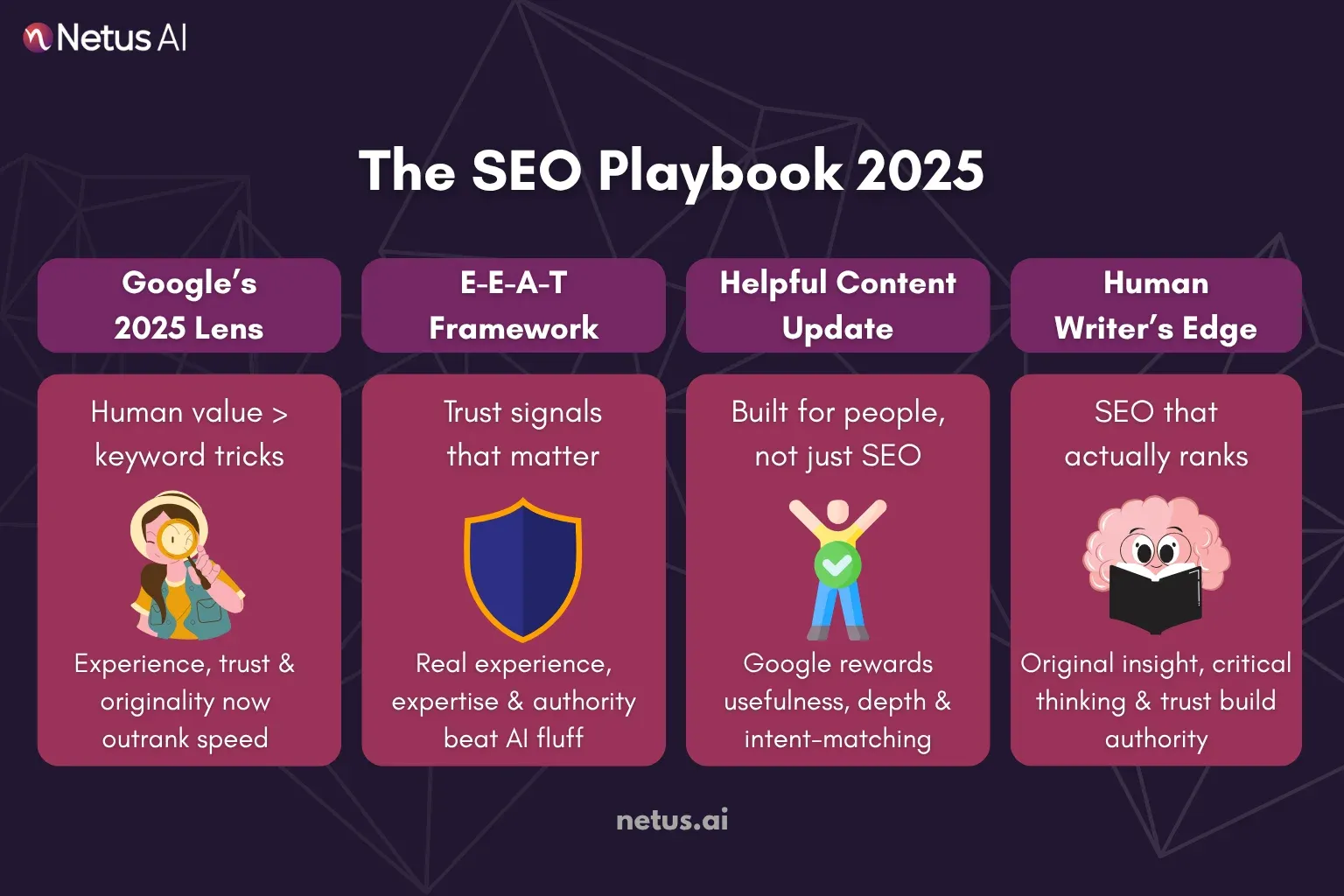
Forget simplistic keyword density metrics. Google’s evaluation of content is a multi-layered, nuanced process laser-focused on one thing: serving the best possible experience to the human searcher. Two frameworks dominate:
E-E-A-T: The north star (experience, expertise, authoritativeness, trustworthiness)
Google prioritizes E-E-A-T (Experience, Expertise, Authoritativeness, Trustworthiness) to fight AI spam. AI lacks genuine Experience and deep Expertise. Authoritativeness comes from quality and citations. Trustworthiness needs accuracy, transparency (AI use), security and no AI hallucinations.
The helpful content system: Value is king
Google's update favors user-centric, helpful, original and satisfying content over SEO-focused material. Focus on real value, unique insights, fully answering user intent and avoid excessive SEO tactics.
What does this mean for the "AI vs SEO writers" battle?
AI content often struggles to rank due to lacking genuine E-E-A-T and helpfulness, as Google penalizes generic, derivative and error-prone "Synthetic Content" that lacks real experience or unique insight. Human fact-checking is necessary.
The scorecard: Where AI dominates & where it crashes and burns
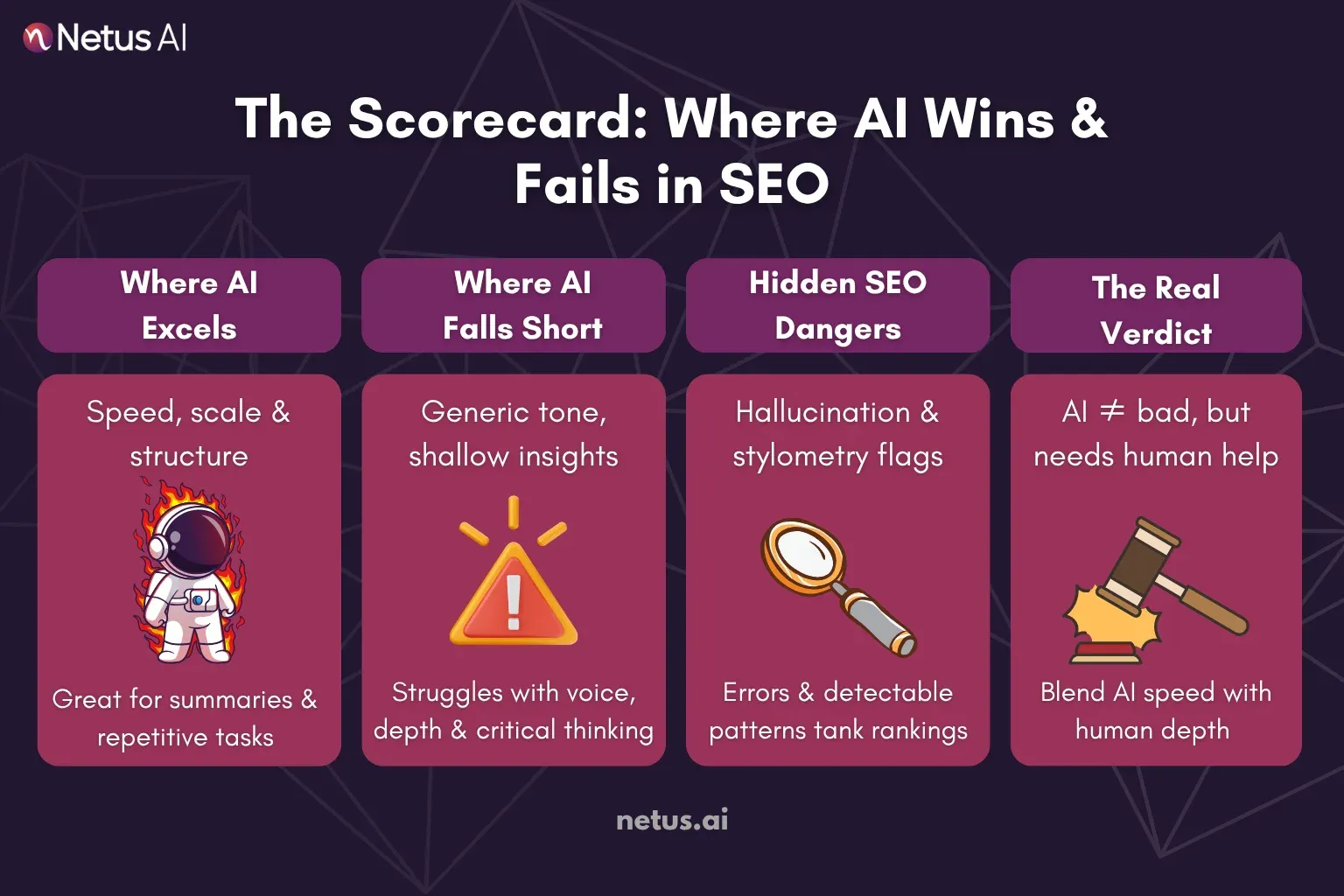
To be honest, AI does not seem bad in itself. When people apply it thoughtfully, it becomes a strong asset. That said, grasping its advantages along with the major drawbacks matters a lot for folks thinking about weaving it into their SEO approach.
Where AI wins (The undeniable advantages)
- Raw speed & unmatched scale: AI's superpower is speed. It generates first drafts, outlines, lists, basic product descriptions and content variations rapidly. AI can create 100 meta descriptions in minutes, drastically reducing time-to-first-draft and efficiently handling high-volume, low-complexity tasks.
- Idea generation & overcoming blocks: Stuck on headlines or angles? AI can instantly provide dozens of options, excellent for brainstorming and overcoming creative paralysis. It fuels ideation and sparks new directions.
- Basic research summarization: AI can swiftly summarize complex reports or articles, quickly extracting key points, which speeds up initial research.
- Handling repetitive, formulaic content: AI handles simple tasks like FAQs, basic descriptions and templated posts, freeing human writers for strategic, high-value work.
Where AI fails (The critical limitations)
- The generic tone & bland voice problem: AI often generates competent but soulless text, struggling to convey a unique brand voice, wit or genuine emotion. This formulaic, bland content fails to engage users, increases bounce rates (a negative Google signal) and prevents memorable brand building.
- Shallow insights & lack of true depth: AI content, predicting the next word, lacks deep conceptual understanding, critical analysis, unique insights, original research and expert perspective (EEAT).
- The hallucination hazard: AI often confidently generates falsehoods, fabricated sources and misrepresentations. This is inherent to LLMs and destroys credibility (Trustworthiness in EEAT). Publishing inaccurate AI content damages reputation and can lead to penalties or lost rankings. Rigorous human fact-checking is mandatory, significantly reducing the speed advantage.
- Stylometry traces & "synthetic fingerprints": AI text, though improving, can have detectable patterns (unnatural phrasing, predictability, lack of variation). If Google flags content as primarily AI-generated and lacking strong EEAT, it may be deprioritized for content with clear human expertise. Using "humanizers" adds cost and complexity.
- Missing nuance & strategic intent: AI struggles with nuanced topics, sarcasm and cultural context. It often fails to grasp the deeper "why" of a search, leading to content that misaligns with complex business goals or sophisticated audiences. Content lacking strategic alignment or misreading intent hurts engagement and conversion metrics.
Content starts at generation: NetusAI’s SEO article writer and content generator
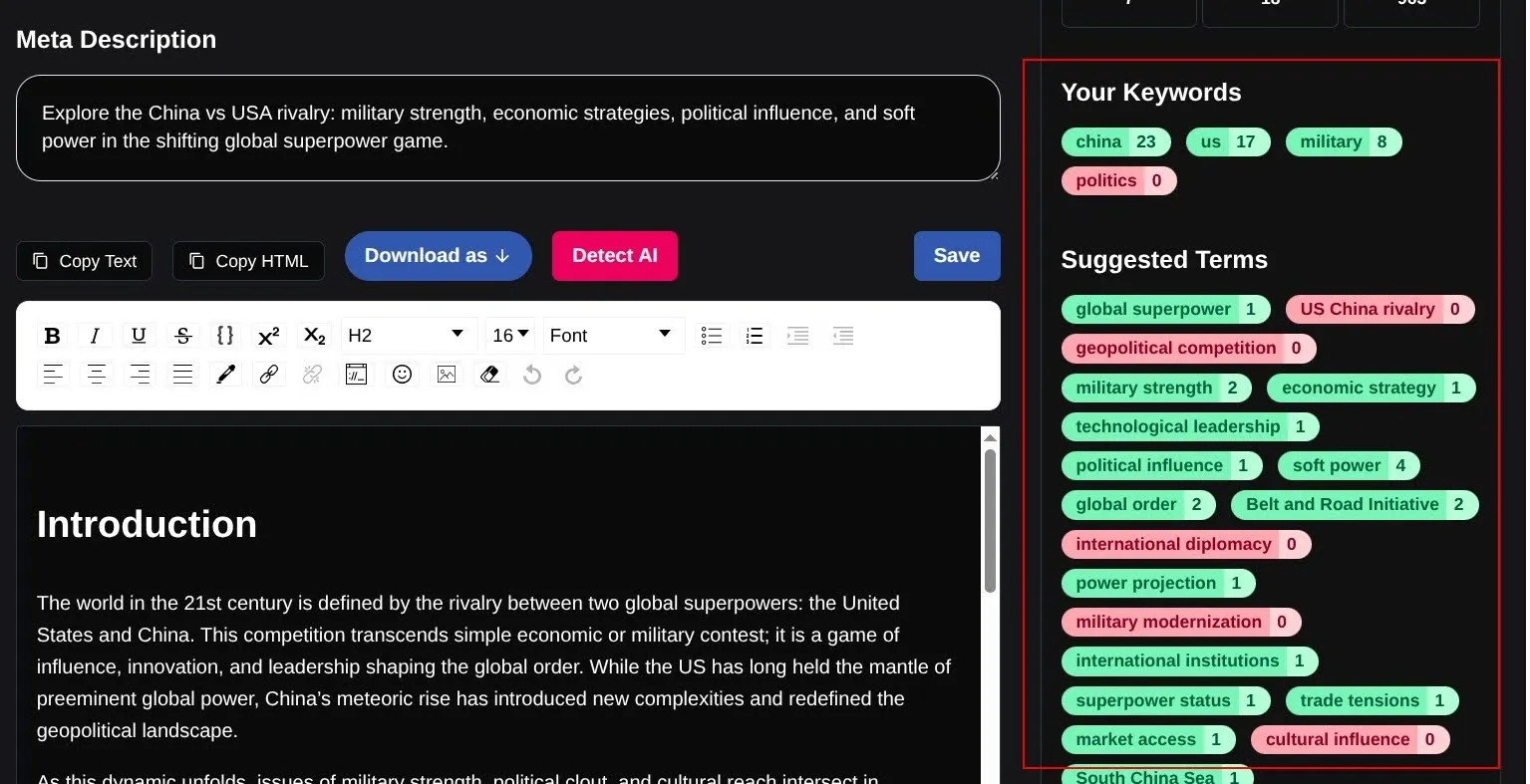
Avoiding stylometry and detection issues shouldn’t begin after content is written, it should start with the writing itself. That’s where NetusAI steps in.
Unlike generic AI tools that churn out robotic, easily flagged paragraphs, The NetusAI SEO article generator is designed to help you create full-length blog posts that are already optimized for clarity, tone and search intent. Unlike generic tools, it goes beyond simple drafting. It:
- Lets you input headlines and targeted SEO keywords
- Supports long-form templates for full blogs
- Auto-generates a structure with Title → Outline → Content
- Works in multiple languages for global teams
And most importantly: it ties directly into the Netus AI bypasser + detector system, meaning your output isn’t just readable, it’s already tuned to avoid detection.
You can generate, review and rewrite all in one interface without needing third-party tools to patch the gaps. It’s built for marketers, freelancers and bloggers who want their AI content to actually pass as human-written.
Content generator
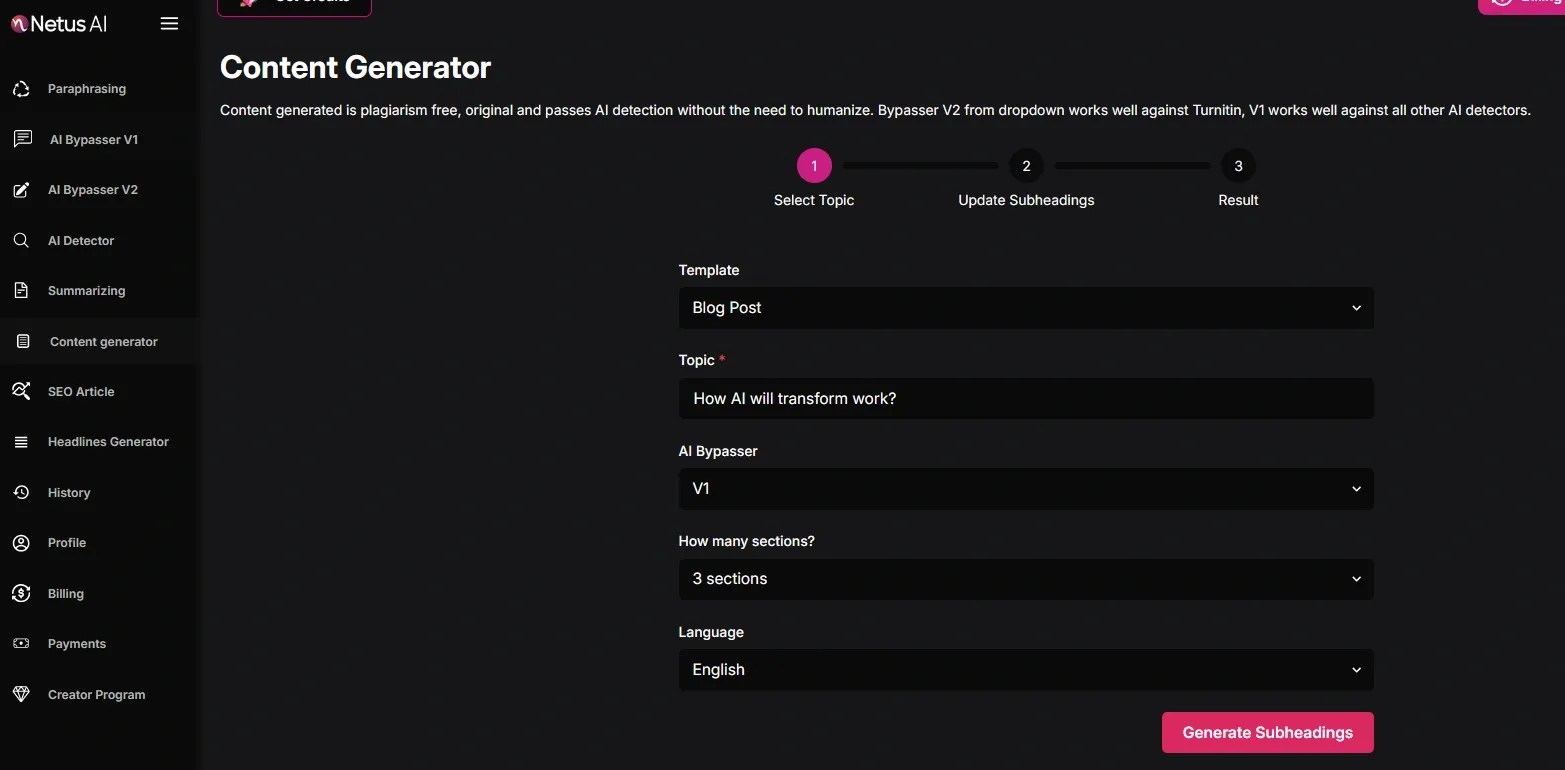
NetusAI also offers a Content Generator. Following the simple steps as shown on the user-friendly NetusAI page, plagiarism free content will be generated from the beginning. The result generated can be downloaded and copied directly as well. Users can easily view their results as they will be stored in the history tab.
So whether you're starting from scratch or turning an idea into a full SEO article, NetusAI saves you time and rewrites, without sacrificing trust or quality.
Final thoughts
Modern SEO writing blends AI tools with human creativity, focusing on audience-centric, helpful content over keyword stuffing. AI aids in speed and drafts but human strategy, empathy and purpose remain vital.
Tools like NetusAI help create long, human-sounding, high-ranking content with built-in SEO.
FAQs
Is AI replacing SEO writers in 2026?
AI is changing the way SEO writers handle their jobs. It helps make writing and research happen a lot quicker. Still, human writers stay really important for things like strategic thinking, adding emotional depth and capturing the brand's unique voice. AI just cannot pull that off effectively right now.
Can AI-written content rank on Google?
AI content ranks best when properly edited and optimized by a human to include EEAT signals. Raw AI output often lacks this.
What’s the best way to start learning SEO writing in 2026?
It is important to consult Google's Search Quality Evaluator Guidelines for solid advice on content standards. Focus on search intent to align with what users actually need and expect. Tools like NetusAI's SEO Article Generator can help speed up the writing process quite a bit. Still, you have to maintain a human touch so the output does not feel robotic or forced.
Do clients and businesses still hire SEO writers?
Yes but expectations have risen. Beyond words, focus on strategy, structure, brand alignment and performance, not just clarity and grammar.
Can I use AI tools like ChatGPT or NetusAI without getting flagged by detectors?
Yes but humanize the content. Tools like NetusAI offer built-in bypassing, rewrites and detectors to ensure the content is authentic.