The growth in advanced AI writing applications has changed how content is created. Yet, people who work in SEO and marketing want to know: Is AI-created content really able to get a spot in Google rankings?
There is a short yes answer; nevertheless, it is much more complicated than simply saying yes. Google's view has changed. Google now puts more importance on helpful, trustworthy content made with a focus on people; it does not matter if AI or humans made it. The main issue is not where content comes from but whether it is good, unique, and fits what searchers need.
Google’s way of looking at things: Quality is more important than the creation method.
Google has clearly communicated that automated content, which includes AI-written texts, is permitted as long as the content maintains quality. But what is meant by “high-quality” according to Google?
- Expertise, Authoritativeness, Trustworthiness, and Experience (E-E-A-T): Is there evidence for deep knowledge with proper sources?
- Helpfulness: Does it answer what the user wanted in detail?
- Originality: Is it different or does it provide some value that others do not?
- Clarity and Readability: Is it written in simple, natural language so everyone can read it easily, and are no grammar mistakes present?
AI is great for speeding up content creation and producing more, but it usually has problems with E-E-A-T and a unique perspective, so content can seem repetitive or lacking in facts. Google lowers the rankings of these types of pieces.
Checking and improving AI content for search optimization
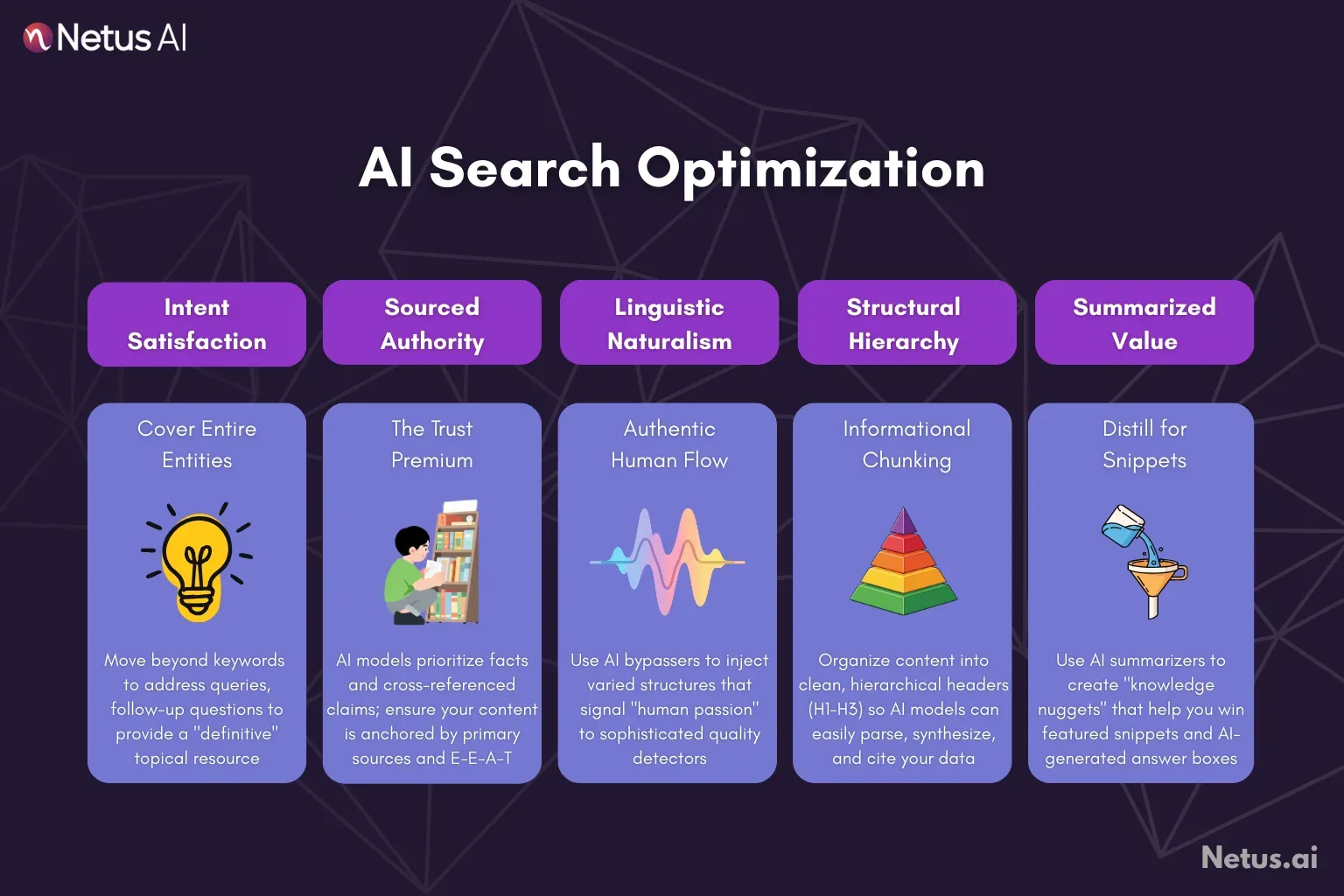
If you want AI-written content to rank, it is important to treat it as a first version, not a finished one. You must properly check it and enhance it with the right tools.
Avoiding generic content problems
A major problem is that AI content sometimes feels robotic. It is repetitive and gets boring, signaling to Google that the quality is lower.
To create original and more human-style content, try using an AI bypasser tool. With this tool, the raw writing from AI is changed so that sentence structure and word use have more human complexity and subtle meaning. This makes the text better for rankings and more appealing.
Preventing detection and penalties for AI content
Even though Google says AI is allowed, as more low-quality and spam content gets online, Google’s system becomes more careful at catching patterns of only machine-made texts. If your writing is seen as low-effort or mass-produced, it can get pushed down by algorithms.
Using an AI detector is required for checking quality. If the content gets a high “AI score,” it means it likely seems too automatic and misses the human elements needed for E-E-A-T. When machine-like parts are found, you can add real examples, your own thoughts, or expert knowledge to fix these places.
Making writing clear and easy to read
AI sometimes makes sentences too complicated or repeats paragraphs unnecessarily. Simple and clear writing keeps readers longer and reduces people leaving fast; both are user experience factors Google prefers.
A good way to solve this issue is to use a paraphrase tool. Instead of redoing every single line yourself, use the tool on tricky or too complex sections from your AI draft. This helps sharpen wording, makes the flow smoother, and lets your audience understand more easily.
Getting to the main points for maximum benefit
AI may create too much text, sometimes about 3,000 words, when the search question only needs 1,500. Longer writing is not always wrong, but if there is too much repetition or filler, user satisfaction drops.
An AI summarizer is very useful for this problem when reviewing a lot of AI writing quickly. It can spot key points, check that main messages are included, and pull short summaries for things like intros, endings or meta descriptions. This saves editors a lot of time.
AI use for search optimization strategy
Bringing AI into your work should help your content plan, not make your writers unnecessary. The best tools for this can speed up the slow parts of developing SEO content.
Fast planning and writing
Before beginning your writing, you should have a topic, a relevant headline, and a brief outline. AI is good at these starting steps because lots of data is involved.
Keyword research:
With a keyword extractor tool, input articles that already do well (your own or competitors’) and quickly find long-tail or related keywords. The AI writer may use these keywords to cover topics better.
Article generation:
The SEO article generator will take your selected keywords plus a headline and make a draft outline and an initial article. This becomes the basic foundation that you modify and improve with other tools later.
Title and brand improvement:
Headlines matter a lot for click-through rates (CTR). Using a title generator or a slogan generator speeds up headline brainstorming and gives you more options, usually better than the typical ones that basic AI chatbots produce.
NetusAI: A central place for making AI content better.
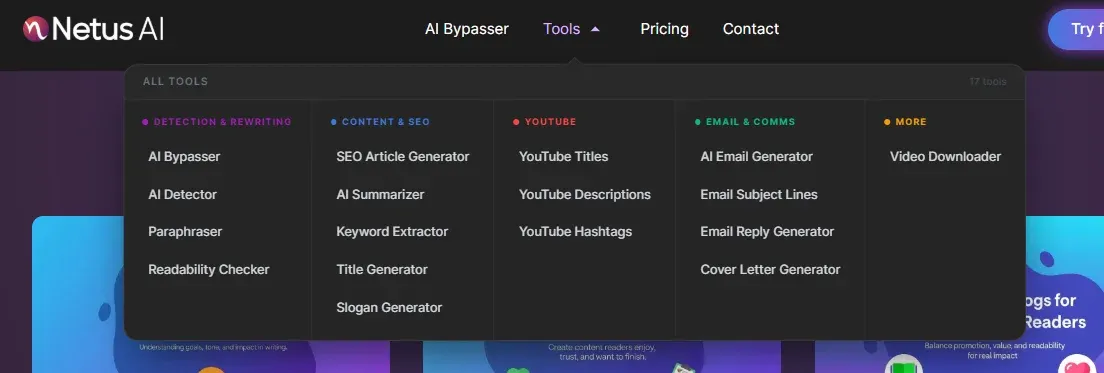
Right now, SEO is all about doing things quickly, keeping the quality high, and being original. Handling lots of AI results and many different fixing tools can easily get complicated, which creates delays, and sometimes quality does not stay the same.
NetusAI lets you check important things such as detection and improve areas like bypassing or paraphrasing, turning basic AI results into content that is good for search engines and focused on people, this can be done much more easily and quickly.
Final thoughts
AI-made content is not magically fixing SEO, but it does make things stronger. When it comes to Google ranking, it does not matter who the author is; material must be high-quality.
What is coming for content writing is a teamwork idea where AI gives speed and volume and SEO specialists, using the correct tools for improvement, give the needed knowledge and human help. With tools that keep content high in quality and feeling more human, and following SEO rules, your AI-supported articles can actually win top spots in the search listings.
FAQs
Is Google punishing AI-generated content?
Google does not directly punish content only because it comes from AI tools. Penalization happens to articles that are not really useful, are full of spam, and are only made to affect search engines, forgetting the person reading. If AI-made writing is corrected, checked for accuracy, and made better to add new value, it can rank well on search engines.
How do I make sure AI content follows Google’s E-E-A-T requirements?
To grow E-E-A-T, you should add an expert’s words to the AI material. Original case studies, personal research data, quotes from skilled people, and confirmation that the text at the end is put under a true expert’s name or trusted source on your webpage are needed. Use a paraphrase tool for rewriting technical points so they're clearer, and employ an AI detector so the writing does not become plain and boring.
Should I say I used AI for writing this article?
Google does not make you reveal it, but being clear is most often a good way to earn audience trust. Still, if the article is changed and checked until it looks totally like a human specialist made it, which is what AI bypasser is for, it is less important to announce it than to make sure the final article meets quality standards. Pay attention to editing standards instead.
How much fixing by human editors is needed for AI text to go high in rankings?
There is not one single percentage, but most often it is smart to show the human element in how the text is built, its tone of voice, and the unique ideas inside. A solid work process uses AI to create the initial version (through SEO article generator), then uses different tools to correct, confirm facts, add expert comments, and find phrases that sound too robotic, often meaning extra effort in editing and checking.
Do AI tools help find topics and keywords?
Yes, they are great at the opening stage of planning content. With the keyword extractor, you can spot important keywords fast, and the title generator gives good headline suggestions that match search intent, giving your AI writing a new approach for quick SEO benefits.