Content production is always developing, and few technological advances have created so much noise and anxiety as the arrival of strong language models like GPT-5.
In addition to its new skill at generating text, there is also a subtler but important big change: content detection using AI is now more advanced.
People working in content, marketers, and web specialists need to realize this change, it is now needed to keep organic reach and trust, not just a nice tip.
Recent advancements in AI detection methods
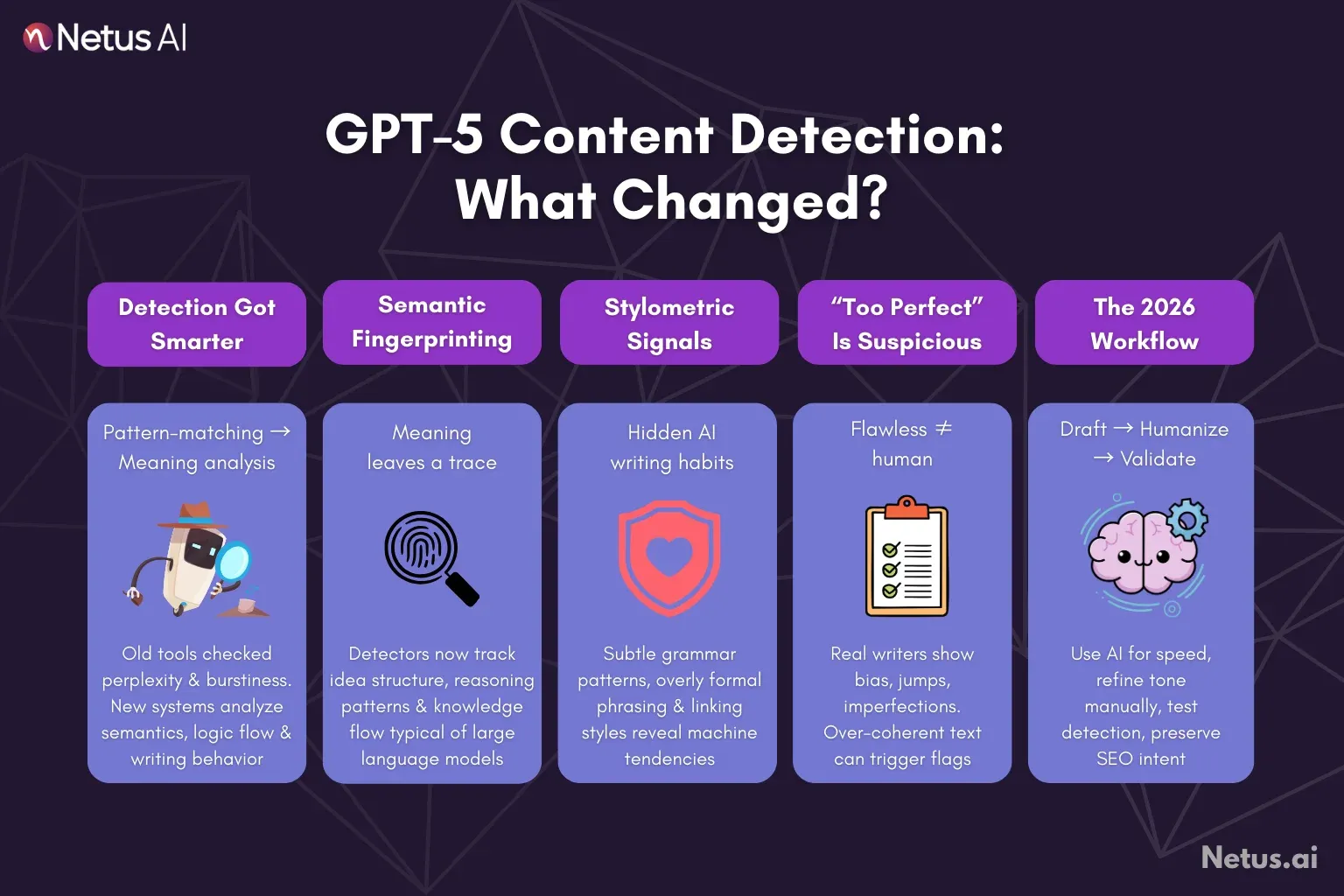
Older types of AI detection machines mostly looked for unusual statistics such as low levels of perplexity (how easy text is to predict) or higher burstiness (repetitive sentence types).
The old detectors worked properly but gave too many incorrect positives or could be tricked by simple edits. With GPT-5, this is very different. What it produces seems much more sophisticated, diverse, and is very hard to tell apart from human writing, especially for people who do not have deep knowledge.
So, new detection tools switched from only matching patterns to going deeper, analyzing semantics and stylistics.
Main AI detection algorithm updates
Semantic fingerprinting
These new detectors now check the meanings underneath and the flow of ideas, searching for logic and knowledge patterns that are common with large language models like GPT-5, not only relying on a certain vocabulary.
Stylometric inconsistency
The most advanced models, like GPT-5, perform with special and faint stylistic habits. Modern detectors are built to spot these hidden “AI touches”, such as distinctive use of grammar, oddly formal expressions, or specific linking phrases.
Contextual coherence
Writers who are human often make small jumps in context or use minor mistakes, which AI most often avoids producing. So, detection systems now watch for writing that is too flawless or missing human bias and mistakes.
How to face AI detection difficulties?
If you work in SEO or create content, your struggle is obvious: how to use the speed and quality of AI-written texts but keep them appearing authentic and high-grade for both search algorithms and newer detection engines.
If you are relying on GPT-5 (or a similar AI) to rapidly create articles, you may see that the straight output scores high for being from AI. That makes editing steps necessary.
To try to avoid getting flagged and to keep the human value in your writing, you should add these tools to your routine.
AI bypasser or Humanizer
If your draft is long and you believe its source might trigger detection, AI bypasser tools can force a complexity, variety, and style that are more similar to how people write. This becomes vital to make AI-authored texts sound normal and pass updated checks.
AI Detector
It is important to always test your finished draft using a trustworthy AI detector before putting it online. It works as quality assurance, offering you a rating of how much the text could be detected as fake. Too high a rating means more editing is needed by a real person.
Tool for Paraphrasing
If some sentences are too repetitive or rigid in style, the paraphrase tool can assist you in rewriting those segments. Simple paraphrasing will still give a robotic feeling, but advanced options use natural language processing methods to create alternative phrases that add needed irregularity and a human touch, helping you fool the detection software.
Article Generator
Even though detection methods keep improving, your content’s central worth retains its power. Using an SEO article generator specializing in arranging articles with top keywords and search intent will guarantee that, while humanizing your drafts, the base-level search optimization is not lost.
Keyword Extractor
To make sure your final, human-corrected article still matches your SEO plan, a Keyword Extractor is very useful. Use it once on the initial AI version to check core subjects, and again after edits to make sure focus keywords remain inserted in a natural manner.
NetusAI: Centralizing content tools
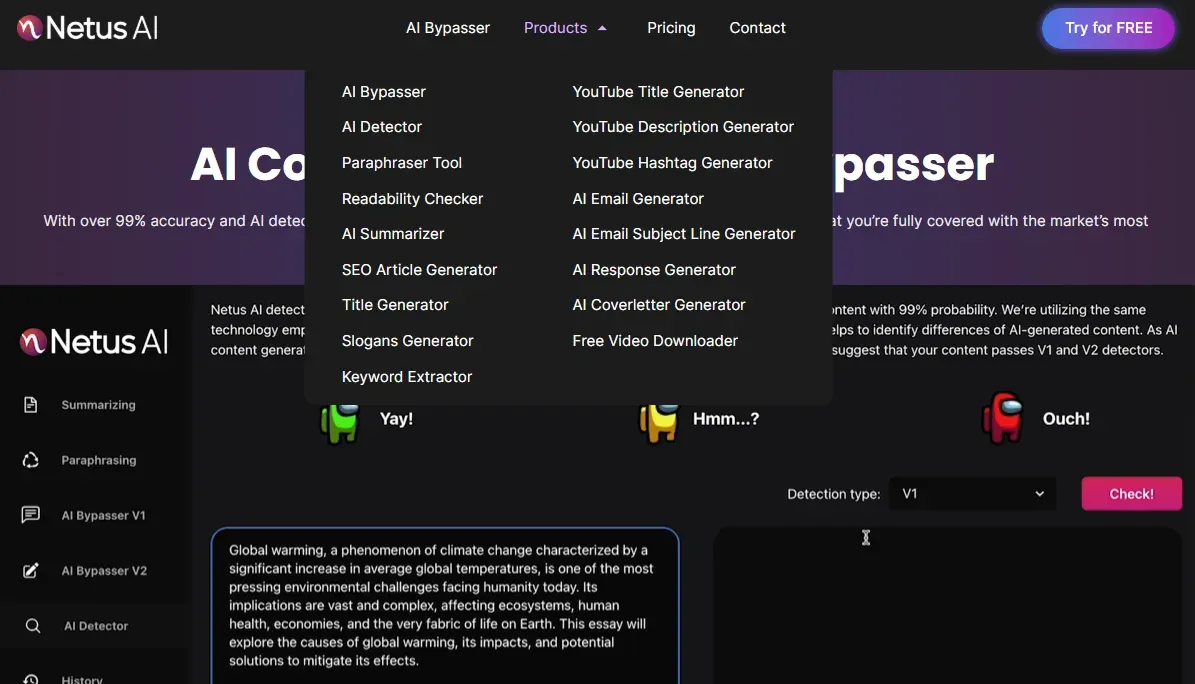
Nowadays, with AI models and detection strategies growing rapidly, it is necessary to use combined and speedy tools. Depending on many separate utilities creates unnecessary complications and can add errors to your article creation.
NetusAI provides a collection of tools acting as an all-in-one answer made for GPT-5's demands. By putting all these together, content producers can efficiently move from quick drafts to improved SEO writing with AI.
This unified method produces writing that is more easily adaptable and authentically human, helping creators reach higher copy volumes while passing strong detection measures. People wanting efficiency without losing authenticity will find that a unified platform makes the detailed actions of AI-based content work smoother and more trustworthy.
Final comments
GPT-5 and future versions represent a big change in content-making abilities. However, this energy must be applied with care and in a good way. The improvement in AI recognition is proof that major sites and search engines are focused on original and human-touched work.
If you use features like AI bypasser with the paraphrase tool, and keep using a trustworthy AI Detector, this approach will help your AI-based method to improve, rather than lower, the quality and integrity of your content. The upcoming SEO involves clever AI usage rather than just depending blindly on technology.
FAQs
How does GPT-4 detection differ from GPT-5?
Basically, the difference comes from switching from looking at statistical patterns (like having low perplexity scores) to going deeper into styles and meanings. Output from GPT-5 is much more layered, so detectors must search for tiny "signs of AI" and patterns in logic and behavior, not only obvious mistakes in structure.
No tool is able to promise full results, but a leading AI bypasser drops the recognition outcome a lot by including more difficulty, differences in style, and errors like a human would have, which changes up the patterns seen in pure AI text. This process is needed to make the writing sound more natural.
Is GPT-5 no longer useful for content creation?
It is not true at all. GPT-5 remains useful for coming up with new ideas, making drafts, finding information, and building outlines.
You should view the text that it produces as a proper draft that needs human checking, correcting, and improving with tools like the paraphrase tool and humanizing steps before publishing.
How much does the keyword extractor matter when GPT-5 is involved in content?
It is an important factor. While changing and making AI text sound more human to pass recognition, it is possible that rooted keywords get removed by mistake. The Keyword Extractor makes sure you keep the main keywords and maintain important density for a strong SEO effect, you know.