Things are getting really busy these days with all the pressure to keep making stuff, and AI is pretty much what everyone uses to stay on top of it.
Raw AI output, for all its fluency, often lacks the soul, the structure and the strategic nuance that both readers and Google crave. This is where the art of the professional paraphrase becomes your most potent secret weapon.
SEO paraphrasing isn't about disguising theft or tricking algorithms; it's the critical process of transformation. It's the bridge between the incredible efficiency of AI and the undeniable quality of content that ranks, resonates and builds real authority.
When it comes to really getting good at this, you have to see that paraphrasing stuff from AI is not just swapping out words like some basic find and replace. It's more involved, kind of like taking that machine made version and adding in what a person knows, the right tone, and even smart ways to handle SEO. I think the point here is not only making it different from the original.
In an era where AI detector safe content is the difference between a top-three ranking and a virtual ghost town of a page, learning to paraphrase like a pro is no longer a nice-to-have skill.
The strategic imperative: Why paraphrasing is your new workflow essential?

To view paraphrasing as mere word-swapping is to miss its immense strategic value. In the context of modern SEO, it's the essential filter that turns generic output into a competitive asset.
AI is undeniably fast but its raw form is often flawed in ways that directly impact performance. It tends to produce content with a uniform, predictable rhythm,a telltale cadence that advanced algorithms and discerning readers can quickly identify.
Paraphrasing bridges this gap between sheer efficiency and genuine quality. It allows you to leverage AI's speed for ideation and drafting while retaining full editorial control over the final product's impact.
The north star: What Google actually wants to see?

People say Google just punishes anything made by AI, but that does not seem totally right to me.
Before starting to rewrite something, it helps to get what the whole point is.
The main thing is not only changing the text up a bit. It is about fitting it to the kinds of signals that Google actually gives points for.
I think the truth gets a little more mixed up than the simple idea.
Google doesn't penalize AI; it penalizes low-value content. And unfortunately, a significant portion of unedited, mass-produced AI content falls squarely into that "low-value" category because it lacks the depth, originality and expertise that define helpful information.
Your guiding principle must be E-E-A-T: Experience, Expertise, Authoritativeness and Trustworthiness. This framework isn't a vague suggestion; it's the bedrock of Google's quality rater guidelines and a strong proxy for what its algorithms seek to promote.
This is where strategic paraphrasing becomes a tool for reinforcing E-E-A-T, not just avoiding flags. When you humanize your SEO blog through paraphrasing, you are actively injecting these qualities. You're replacing generic statements with personal anecdotes that demonstrate Experience.
You're restructuring superficial explanations into deep dives that showcase expertise. You're refining the tone to one of confident authority, building authoritativeness. And you're ensuring factual accuracy and clarity, which are the foundations of Trust.
A professional paraphrase, therefore, makes generic content feel personalized. It transforms a dry explanation of "how to build a backlink" into a narrative that includes a personal story of a failed outreach campaign and the specific, hard-won lesson that led to a better strategy.
The latter version answers the same query but does so with a layer of tangible, real-world proof that Google's systems are designed to recognize and elevate. You're paraphrasing not just for stylistic change but for substantive depth.
The pitfalls: How to avoid sabotaging your own work?

People try hard to paraphrase stuff without getting caught, but a lot of those attempts just don't work because they hit these usual mistakes that are pretty bad.
They assist in the process but the final judgment call,does this sound like something a knowledgeable, helpful human would actually say?,always rests with you. Your human eye is the final and most important filter in the quest to rewrite content for SEO that truly performs.
NetusAI: Paraphrasing
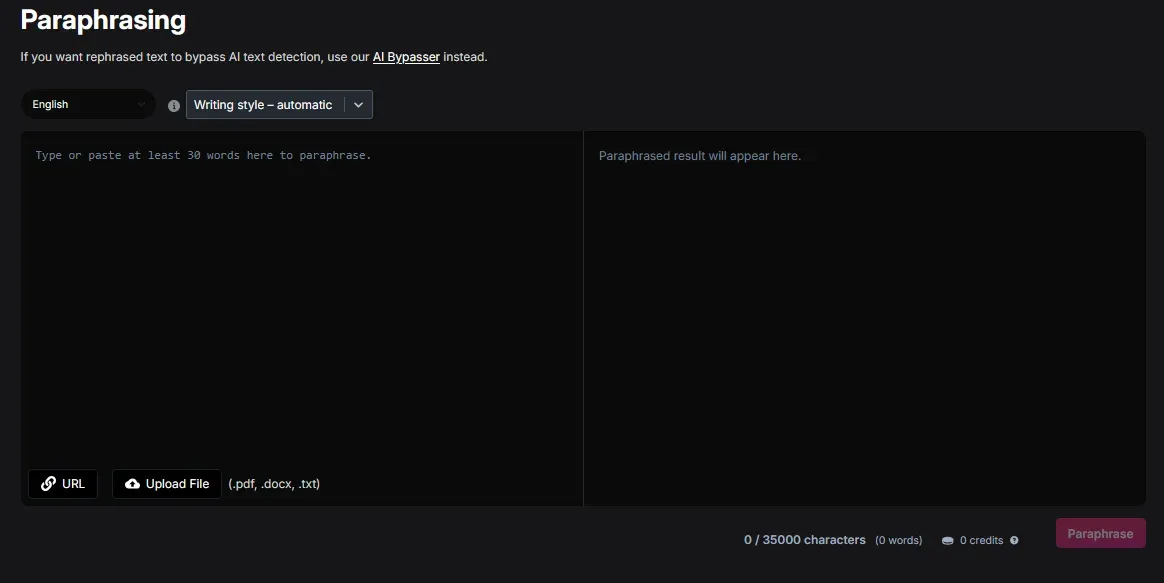
Paraphrasing isn’t just about swapping words, it’s about restructuring content to make it clear, undetectable and human-sounding. That’s exactly where NetusAI excels.
The Netus Paraphrasing Tool goes beyond surface-level rewrites. It intelligently restructures sentence flow, shifts phrasing and preserves meaning, all while keeping your tone intact.
Optimized for all use cases: Whether you’re rewriting SEO blog posts, academic content or AI-generated drafts, Netus adapts to your context.
Massive input limit: Paraphrase large documents in one go, perfect for long-form blog sections or entire documents.
Upload or fetch text: You can drop in files (.docx, .pdf, .txt) or input a URL to auto-fetch content from any web page.
Freeze words for precision: Lock in domain-specific terms and brand names so they remain untouched in the final output.
Works in any language: Multilingual support helps global writers humanize content in 36+ languages.
And the best part? It’s not just a one-way rewriter, it works in real-time sync with the AI Detector and Bypass Engine, giving you immediate feedback and letting you tweak until your content passes every test.
No more guessing. Just rewrite, test and pass, in a single streamlined window.
Use smart tools like NetusAI’s SEO article generator + keyword extractor
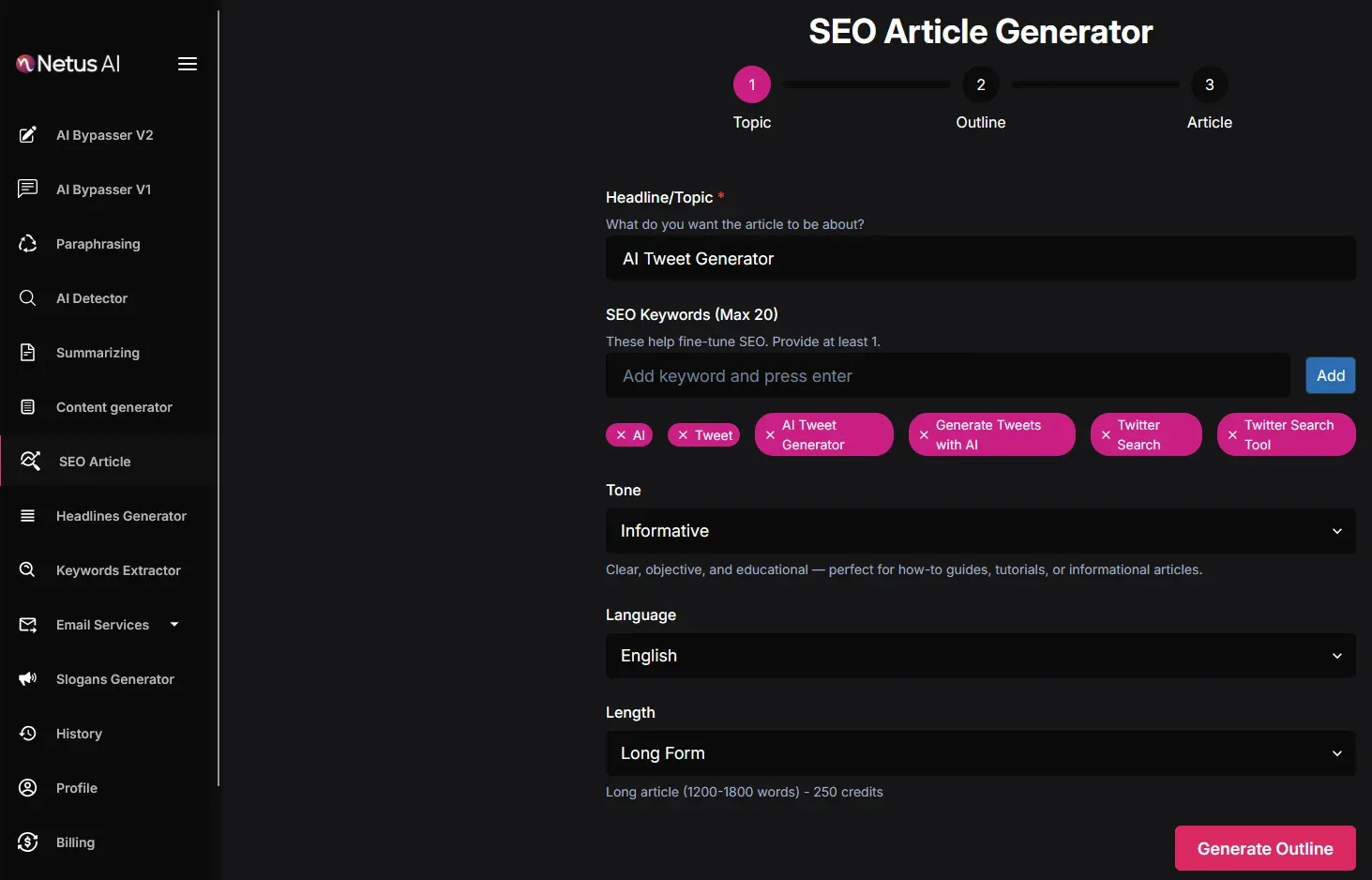
Creating helpful content consistently isn’t just about writing, it’s about structuring your content around real intent, valuable keywords and organic tone.
That’s exactly where NetusAI’s SEO Article Generator shines. It doesn’t just pump out generic AI copy, it builds blog drafts using optimized headings, proper keyword density and a natural flow that aligns with Google's latest “people-first” expectations.
Final thoughts
Paraphrasing for SEO isn’t about spinning words,it’s about rewriting with purpose. Whether you're refreshing outdated content or making AI-generated text sound more human, the goal is always the same: clarity, originality and visibility.
Tools like NetusAI make this process smarter, not harder,by combining advanced rewriting with built-in AI detection and stylometry-safe output.
If you’re serious about ranking in a post-AI world, don’t just rewrite,restructure, recheck and humanize. That’s the SEO writer’s edge.
FAQs
What’s the safest way to paraphrase AI-generated content?
Use a paraphrasing tool that also includes AI detection like NetusAI. So, you can rewrite and test in the same window until you get a “Human” verdict.
Will paraphrasing affect my content’s SEO value?
If done manually or poorly, yes. But when done right (preserving structure, tone, keywords and EEAT), paraphrasing can actually boost SEO by eliminating robotic phrasing and improving readability.
Can NetusAI paraphrase entire blog posts?
Yes. NetusAI supports large input, allowing you to paraphrase long-form content like full blog posts or academic papers.
Does paraphrasing help bypass stylometry-based AI detection?
Yes, if the paraphrasing is deep enough. NetusAI reworks structure, rhythm and syntax to help avoid stylometric fingerprints that detectors look for.
How do I ensure brand terms aren’t changed while paraphrasing?
NetusAI offers a “freeze words” option, simply add brand names, technical terms or keywords you don’t want altered and they’ll stay locked during the rewrite.
Can I input content from a web page or document?
Absolutely. You can upload files (.docx, .pdf, .txt) or paste a URL and let NetusAI fetch the content automatically.
Is paraphrasing considered unethical or “cheating”?
Paraphrasing is a legitimate technique,especially when it’s used to clarify, restructure or localize content for better engagement. It only becomes unethical when used to plagiarize or deceive.
Does Google penalize paraphrased content?
No, Google penalizes low-quality or duplicate content, not paraphrased content that adds value. As long as your rewritten content is helpful, humanized and original, you’re safe.