Getting flagged for “AI detected” in your school assignments is annoying and can cause much worry for university students. Due to popular tools like chatGPT being used by many, many colleges now commonly use AI detection programs to stop cheating and help maintain academic honesty standards.
But these software systems make mistakes, so they often flag human writing in the wrong way. This can put your academic reputation and maybe even your future at risk.
With this advice, you will be helped to understand the steps you should follow to fight the AI flag and maybe clear your reputation.
Understanding why false flags happen: Main triggers
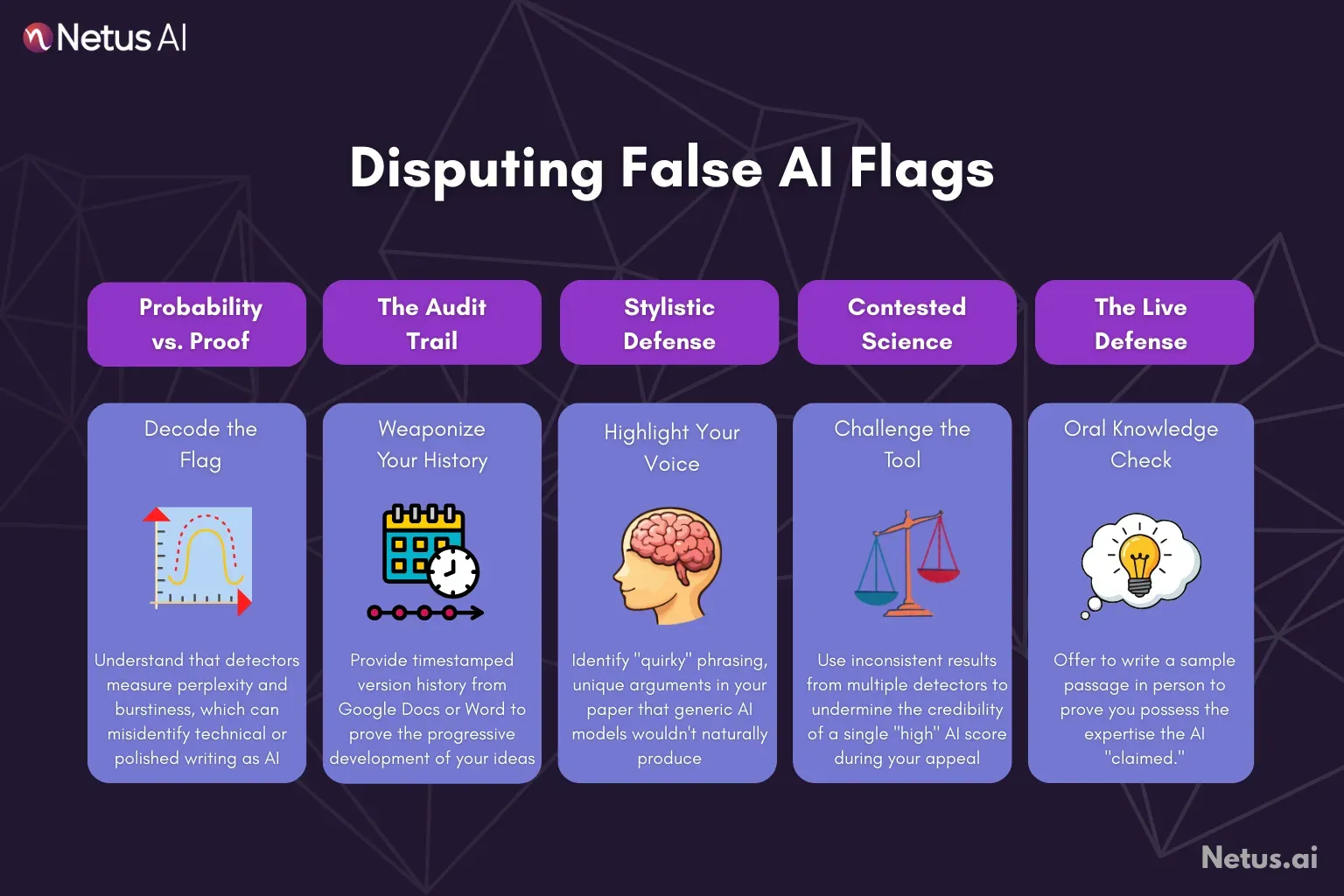
You have to be clear about the reasons for being flagged before a dispute. AI detectors scan the structure and language patterns of writing. These tools use perplexity and burstiness, which are technical metrics that measure how much unpredictability and complexity show up in texts written by people.
Some common triggers for false alerts
Too Many Revisions or Using Paraphrases: When you revise your work too much or you use a simple paraphrasing website or app, even if most of the writing is your own, your essay starts to appear too organized, smooth, and tidy, very similar to what AI creates.
Very technical or repetitive subjects
In engineering or science classes where you need to include many strict technical terms, your sentences sometimes do not change much, so the writing might look like a computer did it.
Using AI ideas or structural outlines
When you make your plan with the help of AI (like an outline or brainstorming), even if you write every sentence yourself, there can be invisible patterns that get flagged.
How to try beating an AI flag: Main steps to take
Stay calm first and gather supports
Getting angry or worried will only work against you. As soon as you find out about the situation, it is best to collect evidence to show you did all the writing.
Check history of your drafts
If you worked with Google Docs or Microsoft Word, you should look at your file’s history. With time stamps and old drafts, this record shows change steps, stops and fixes, all showing your real human work.
Collect brainstorming and outline documents
Get your work plans, mind maps, or early research notes. Those papers show how you made your arguments and ideas in a human way.
Analyse any reports (if the teacher shared them)
If the teacher gives you the official report about the AI flag, read each detail closely. You must see which sentences caused the flagging. Sometimes, only a few lines trigger an alert.
Try more AI detectors
Copy the marked sentences and check with different online AI detector sites or apps. There are times when these do not agree. That detail helps lower trust in your school’s flag.
Highlight your writing identity
Artificial intelligence text misses unique crafts seen in students' writing, including odd main points, personal examples, and changes in tone or wording style.
Pick out your special points
Show your key opinions, points, or facts that came from your brain, life, or what you learned in your classes, not copied from the public web.
Try “bypass” AI analysis
Sometimes, using AI bypassers on your own text can help find style details the detector flagged. They might help in seeing what makes it “look AI.” Warning: Do not change your original essay with such software. Only use it to look for why it got flagged.
Get ready for meeting defenses
Teachers sometimes want interviews or live writing tests to prove you did the work.
Explain whole process
You will need to explain step by step how your assignment was built. “First, I had an idea. After that, I searched for sources A and B, because the most difficult part to include was idea Q…”
Write impromptu in front of the instructor:
You may be asked to do some short writing about your essay while the teacher is watching. Let them see you really write. This is good, strong evidence.
Save all evidence
You should keep all records. For any official challenge on the flag, proof is needed.
Write a formal statement
Prepare a letter in a respectful way to challenge your AI flag, including facts. Attach version records, notes, and any detector comparisons as extra parts.
Using AI to summarize proof
When you have lots of drafts or planning documents, it could help to use an AI tool to summarize the main areas. This lets teachers scan quickly and see your ideas are complex and present deep topic knowledge that is difficult for AI to make by itself.
NetusAI: Your all-in-one toolbox for academic honesty
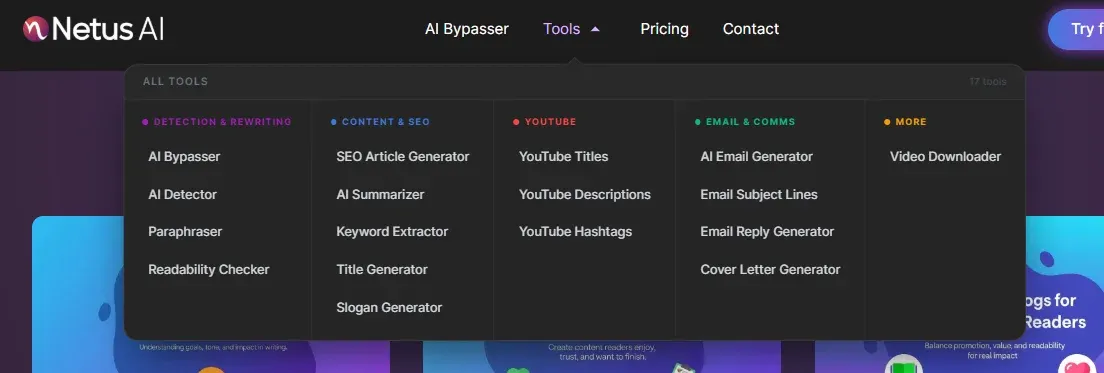
NetusAI provides a set of combined tools made for you not just to produce new content but primarily to let you understand, improve, and show the authenticity of your personal writing.
By using these tools for checking and editing before submitting work, you become better prepared to spot and fix accidental style issues that might set off a false AI flag, which actually gives you a much stronger base when it comes to defending your work if any AI detection problems come up in the future.
Final words
AI technology now makes academic checking more challenging, but this doesn’t erase human effort’s true value. If you get a false positive by AI detection, it is a difficult problem, but it is not something that you can never solve.
When you address the problem with facts, reasonable points, and full knowledge of your writing style, it becomes possible to protect your ideas and keep your good reputation at university. Do not forget that what proves your hard work, like drafts, notes, or those particular thoughts only you had, has more weight than just what an algorithm can generate.
FAQs
What to do if I used some generic AI for help in brainstorming?
You should tell the truth and point out that it was only for the thinking process, and that the real writing, all research, and your own unique points are fully yours. It helps if you clearly show what actions you took after using AI ideas and how you made academic writing become your personal and studied work.
How long will a dispute over an AI flag usually last?
Time varies widely between schools and their departments. Some small checks with just a teacher take a few days, but more official university-level hearings might drag out for many weeks or even months. Stay calm and keep checking regularly.
Should I get a lawyer or just an advocate?
At first, for small reviews or maybe appealing to the department, you mostly do not need a lawyer. Just focus your energy on real evidence. Still, if the issue goes up to a main university hearing where you might get kicked out or suspended, then you should think about bringing someone who knows academic integrity laws or a student advocate.
Can my paper be flagged because I put in lots of quotations?
Actually, yes; using many quotes, even if you cite them, can cause problems. AI detection may not always tell quoted writing and AI-text apart clearly. Also, using too little original content can push your originality numbers down. Try to have a lot of your own analysis in the document, not mostly quoted lines.
Is requesting a chance to rewrite always good?
Only do this if the facts you have are weak, or if your instructor clearly says it is a choice rather than facing major academic punishment. Winning your dispute should involve getting your first work approved, not swapped. If you choose to rewrite, it sometimes means you are agreeing you made an initial mistake.