Blogging is very important for digital marketing, showing expertise, bringing in visitors to websites, and generating leads.
But there is always a need for more good content, and that can become a challenge when you have limited hours. It can take a long time to create a quality blog post.
This guide has 10 ideas you can use to make your writing methods much quicker and more efficient, helping you get things finished sooner.
Learn pre-writing and planning
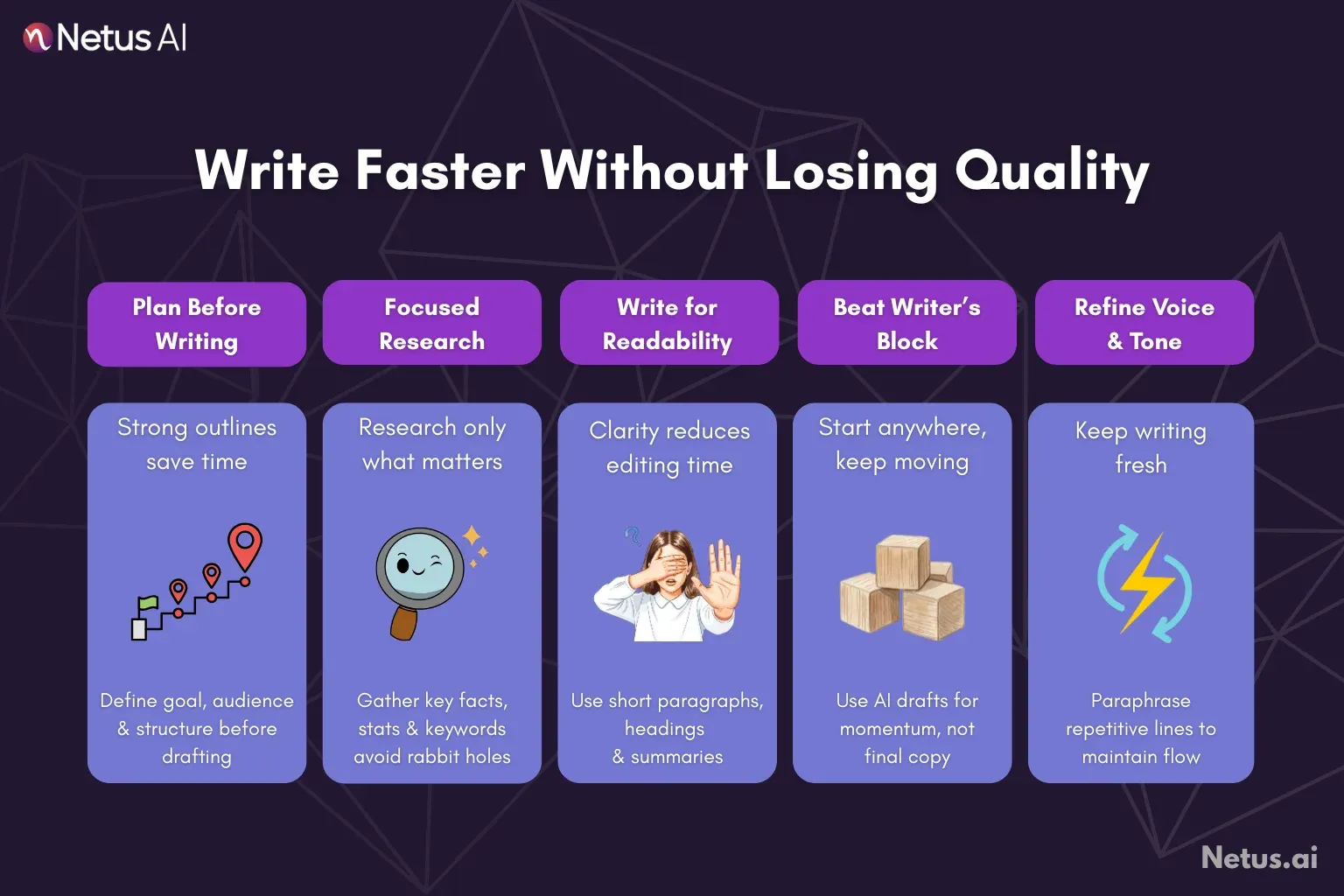
Most of your time is often lost not in the writing, but in wandering around before and during the drafting process because it’s badly planned. You need a well-done outline; it works effortlessly as your fast-track path.
Know your goal and audience
Before any actual writing, make sure you know the reason behind the post (maybe it’s to collect sign-ups, answer popular questions, or rank for certain keywords) and decide for whom the post is written.
Having this in mind always helps the post stay on point and keeps the writing from wandering.
Outline all the main ideas
Making a detailed outline gives you direction for what goes where and prevents you from getting lost.
Break your writing into H2 and H3 (main and minor sections). Write points, some statistics, and examples for each one. This step will help you avoid the usual case of not knowing what to write next.
For speed: Try the title generator before you do the main writing. If you have a strong headline, you can focus the post more sharply, and it helps you decide quickly what the theme will be while you are structuring your outline.
Research only what you need
Doing research is an easy way to lose a lot of minutes or hours. To prevent that, limit your time intentionally and check only the information that your plan requires.
Find the main facts only
Go for important facts, numbers, good quotations, or examples that really push your points further.
For speed: Use a keyword extractor so you can quickly find out which words and ideas are most important for your theme. This keeps your study of the topic connected to what people actually want to read about.
Make readability better as you write
While editing and writing are different, keeping the post clear for others to read saves time when you move to edits. Use smaller paragraph blocks, have understandable headers, and, where needed, add bullet-point lists.
For speed: If your post needs a lot of information or complicated explanations, allow the AI Summarizer to condense these ideas into shorter messages. You will be able to fit complex stories in without creating big walls of text, and your reader can follow along without losing track.
Beat writer’s block quickly
Writer’s block usually comes when the beginning seems too intimidating.
Write the middle part first
Is the opening too hard for you? Just move to whichever section is simplest to start with. Getting something down gets you moving.
Let AI provide a fast start
Maybe you only need a couple of paragraphs to begin.
For speed: Put your main subject and a few target search words into an SEO Article Generator. Even taking only some sentences or ideas from the suggested output will help you get past the fear of blank pages and give you a good foundation to continue.
Tweak your writing voice and tone
Having a voice that is always similar helps content feel connected, but it can sometimes feel boring or repetitive.
Change the structure of sentences
If your writing sounds boring and always the same, it becomes less enjoyable both to write and to read.
For speed: If a certain line sounds too forced, too wordy, or repetitive, you can use a paraphrase tool. This will give you new versions, and mixing up your sentences lets you keep moving forward without having to stop to fix what you already said.
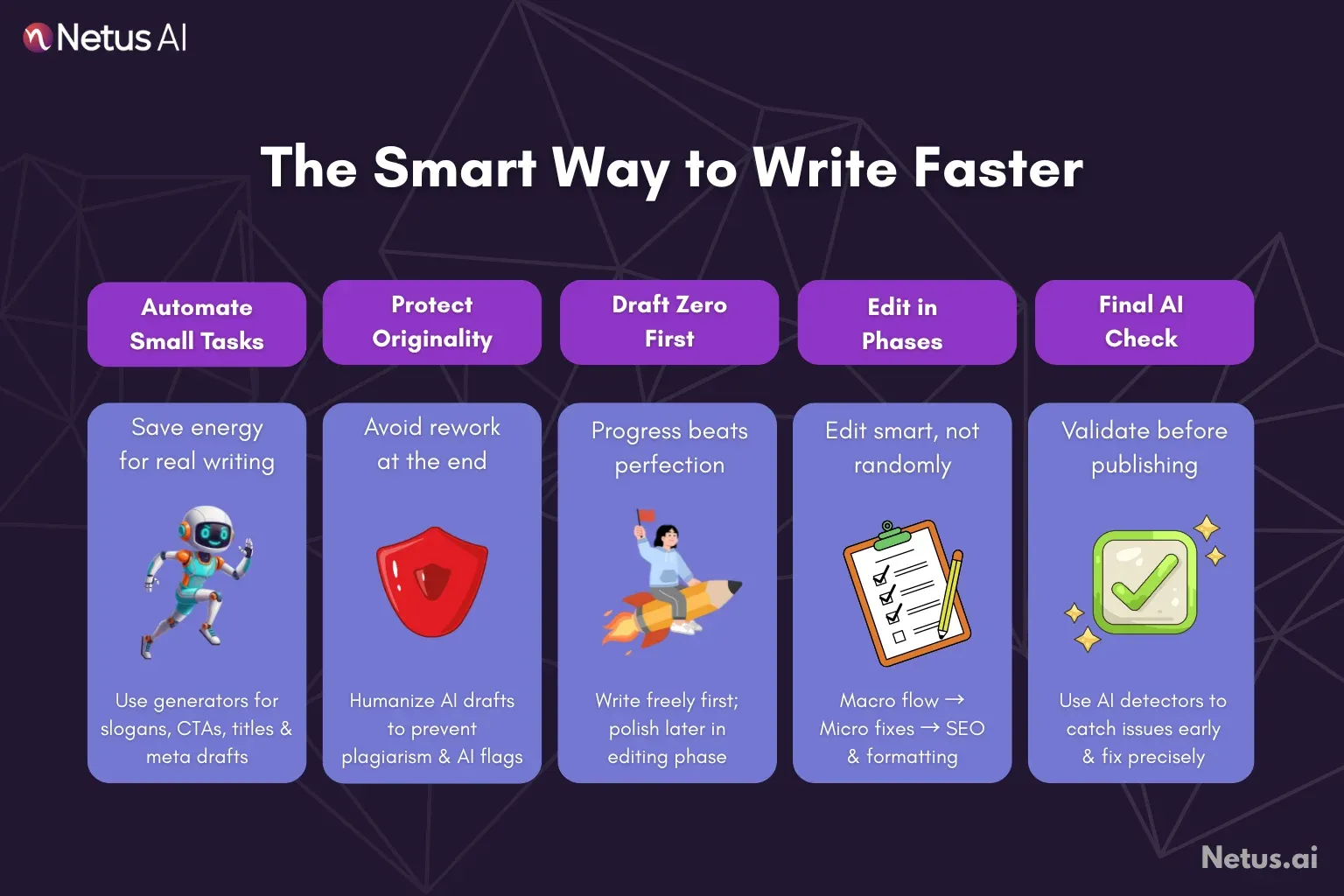
Automate boring tasks
Automatic tools are not supposed to destroy your originality, but they really do remove mental tiredness by doing boring jobs for you.
For titles and meta descriptions
Although you may want to make changes, tools let you quickly generate rough titles and meta descriptions.
For speed: While you build CTAs or smaller headlines that need to be short and grab attention, let a Title Generator give you choices that are memorable. This way, you do not waste time thinking too hard about nice phrases and can just pick something catchy very quickly.
Avoid issues with plagiarism and AI detectors
Using AI utilities or extensive research from other articles can sometimes cause your post to be flagged by plagiarism programs or detected by AI checkers, which means you might need to rewrite much of it.
For speed: To make sure the final draft—even if you used lots of AI or research—reads like it was written by a real human, use an AI bypasser or some type of humanization program. This ensures your blog post passes originality checkers and significantly reduces the need for a major re-edit at the end.
Use the “draft zero” method
Know that your first version cannot and will not be perfect. Having something rather than nothing is the principle. Don’t worry about correcting it and making it perfect the first time. That is why editing is a separate step.
Adopt a solid editing checklist
When all writing is finished, switch your mindset only to editing. Use a checklist that helps you check every important aspect thoroughly.
Phase one should be Macro Edits: make sure your post flows logically, keeps the same idea, and maintains your original structure. After that, do Micro Edits for spelling, grammar, and punctuation.
Do not skip the AI check
These days, it is increasingly necessary for your blog to meet originality requirements, mostly for SEO purposes.
For speed: Before you send your article to be published, pass it through an AI detector to get the originality score. If the score is not high, you’ll know where to use your manual “make it real” skills or use the AI bypasser, so you don’t waste effort randomly fixing things throughout the whole work.
How NetusAI can make writing quicker
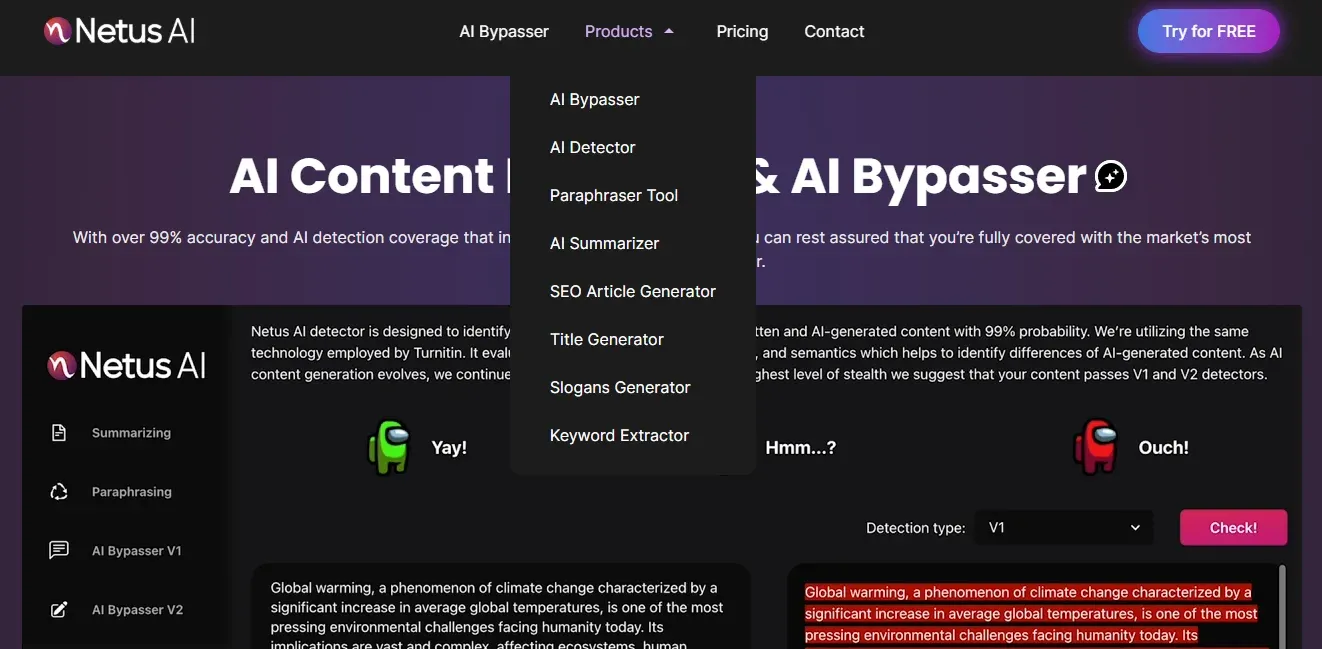
Netus AI contains a group of tools for people who need to work with creating content quickly.
There is an AI Bypasser, sometimes called the Humanizer, which tries to make things not look like they were written by an AI, and also an AI Detector that lets you determine if something is stolen or authentic.
A paraphrasing tool helps make your sentences simpler, and an AI summarizer shortens research texts.
Users can use the SEO Article Generator for keyword drafts and the Title Generator for coming up with good titles, so Netus AI makes content jobs smoother.
Final words
There are ways to write blog posts quickly, and the emphasis should be on improving the process instead of only increasing typing speed.
It is important that you plan ahead, try making a rough draft first and then improve it, and use useful tools for things that take up much time, such as doing keyword research, making AI text sound natural, or summarizing the research work.
Doing these 10 pieces of advice regularly means you avoid blank pages more often and get higher-quality content in less time.
FAQs
Which step saves the most time for writing?
The step that saves the most time is making a detailed outline before starting the writing. This step stops you from changing topics, helps with writer’s block, and keeps the article making sense from beginning to end.
How much time should I expect to spend finishing a blog post?
Time will depend greatly on the blog’s length and complexity, as well as your own speed. Still, by using these efficiency techniques, a regular 1,500-word SEO article may require about 2 to 4 hours from research to completed draft.
Can I let AI write entire blog sections for me?
It is okay to use AI tools, such as SEO Article Generator, for giving you basic drafts or harder sections. However, always pass your text through an AI bypasser so that it sounds human, is original, and fits your own style before posting.
How can I speed up production of my present content?
Go back to the best-performing content formats, such as list-based articles or comprehensive guides, and set up templates you can reuse. You should also run Keyword Extractor on those pieces to come up with similar new topics using your older research.
What is one way to be sure AI content will not be penalized by search engines?
Make sure to provide new value, expertise, authority, trust, and experience (E-E-A-T). Also, always scan your finished draft with an AI detector to confirm it probably will not be seen as AI-created, after which you may adjust it using humanizing or paraphrasing features.