In a dynamic field like digital marketing, people too often confuse “copywriting” and “content writing,” especially those new to a business or who wish for a stronger online image.
Both require writing and are vital for achieving better digital outcomes, but their methods, intentions, and effects in the short term and long term can be fundamentally different.
Knowing these little details is important for whoever wants to hire the right writer or better organize the marketing ideas that are needed.
The main point: Convince vs tell
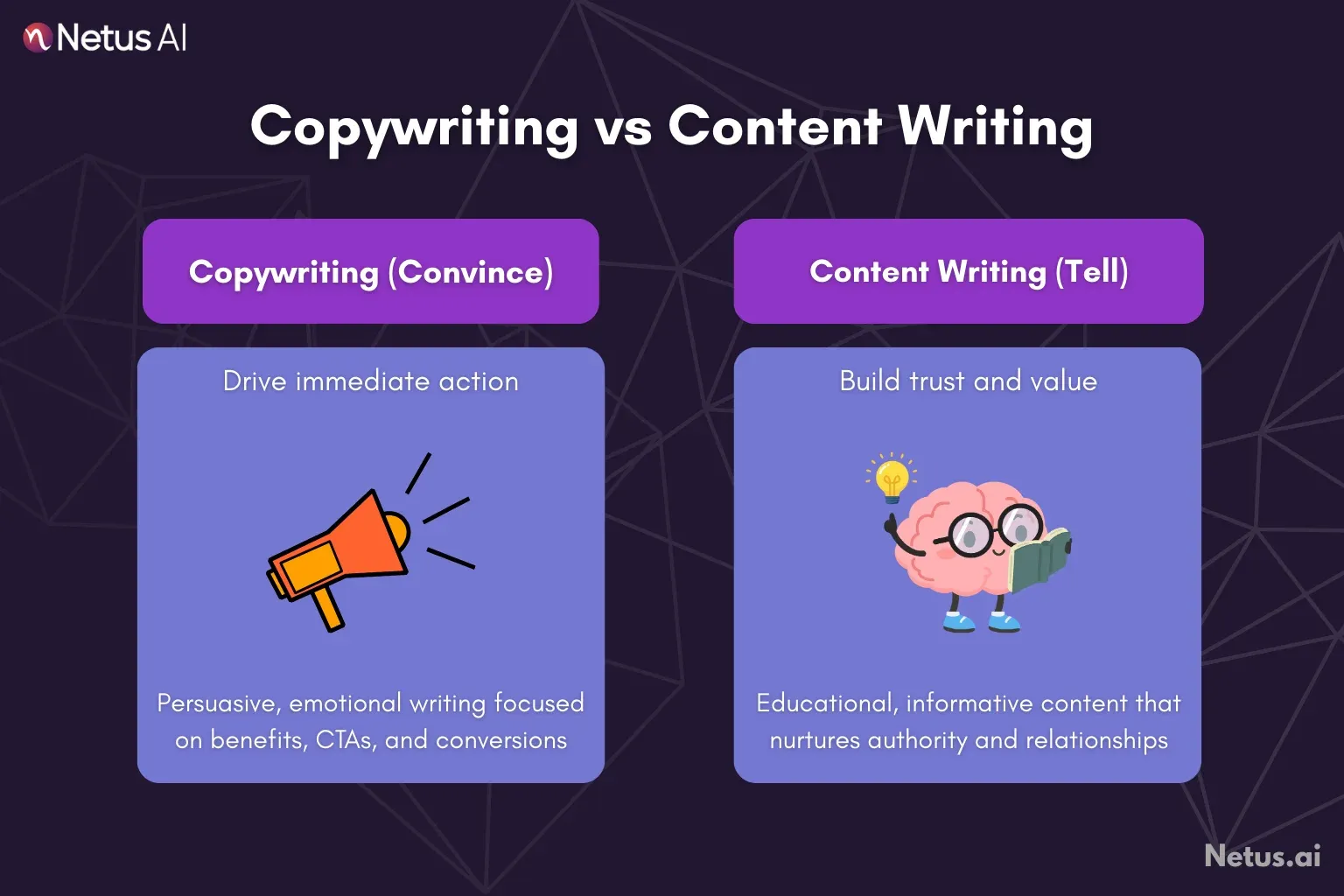
The biggest difference comes from what the target goal of each writing style is.
Copywriting is basically sales, only done with written words. The copywriter has to get an immediate reaction.
Usually, you want your readers to take direct steps: buy this product, press the link, subscribe as a newsletter member, or just get an ebook. You see, copywriting is more straightforward, emotional, and focused on benefits, not only a list of features.
Content writing, on the other hand, takes the approach of making connections and sharing value. Its purpose is for people to learn, get entertained, become educated, and at the same time, create strong trust with the brand.
Content writers develop text that will give the company more expertise, respond to questions from customers, and softly lead them in the user experience.
|
Aspect |
Copywriting |
Content Writing |
|---|---|---|
|
First Goal |
Instant action (sales, sign-ups, clicking ads) |
Trust in the long term, teaching, and being an authority |
|
Duration of Effect |
Short one, i.e., fast result (leads and sales) |
Longer-term returns (ranking on search, loyalty) |
|
Style / Feeling |
Emotional, very clear, urgent and persuasive |
Informing, teaching, fun, more neutral feeling |
|
Average Length |
Short. (Such as ad titles, subject lines for emails) |
Longer materials (examples: blog articles, whitepapers, ebooks) |
|
Main Statistics Shown |
Conversion, Sales, Clicks |
Organic users: How much reading, sharing? |
A copywriter mostly does the following things
Copywriting works to generate direct responses and also helps increase conversions across different marketing platforms. Its main uses include writing effective content for landing pages and various other parts of websites focused on selling.
Also, copywriting is needed when you have to write clear and powerful ad texts, such as for a Google search or on social sites. There is also creating emails for marketing that are supposed to get more conversions, plus writing short and interesting headlines or wording to grab someone’s attention straight away.
Copywriters, too, must write all calls to action you see over chief web sections.
A content writer does
Content writing means writing many types of longer, informative pieces. It can include things like blog posts, articles, and sometimes bigger projects, for example, e-books or whitepapers.
Besides, content writers create materials with a focus on customer stories and provide lots of information about the products. This sometimes involves writing customer story examples or even case study documents.
They also create product details that may contain various information; these often need a good explanation and a full-length guide. Other kinds of content that are common are newsletters and even very large guidebooks with a lot of details.
SEO strategy and the role of both on-page and off-page optimization
When you are an SEO specialist, it becomes clear that content writing and copywriting must both be used. Informational content that is long and well-written brings website visitors, while the persuasive, catchy writing of a copywriter converts those visitors into actual clients or users.
To help content writers demonstrate authority and increase visibility in search, ensure they write thorough articles quickly. Good digital tools can boost productivity. When dealing with a detailed topic, using an SEO Article Generator can help start an article and ensure important topics are discussed and aligned with search goals.
If the draft is finished, using a paraphrase tool afterward helps fix sentences, avoids copying, and makes the text newer and more interesting, while not changing the main message.
On the other hand, a copywriter should check that all text is unique and not the same as what a computer writes. People now use AI even when creating ads, so copywriters must be sharp. If you try using AI for headlines or ads, check your writing in an AI Bypasser or Detector (modern tools often have these two options together) to ensure the text looks human and to avoid being penalized with poor engagement.
Also, for your catchy titles to succeed, strong search research is a must. Keyword Extractor lets you find popular words that show what people want and when they may buy.
Success in digital requires using both and not asking, “What to choose?” Use content to be visible and educate; copywriting is to motivate action and sell things.
All-in-one solution for text planning in digital
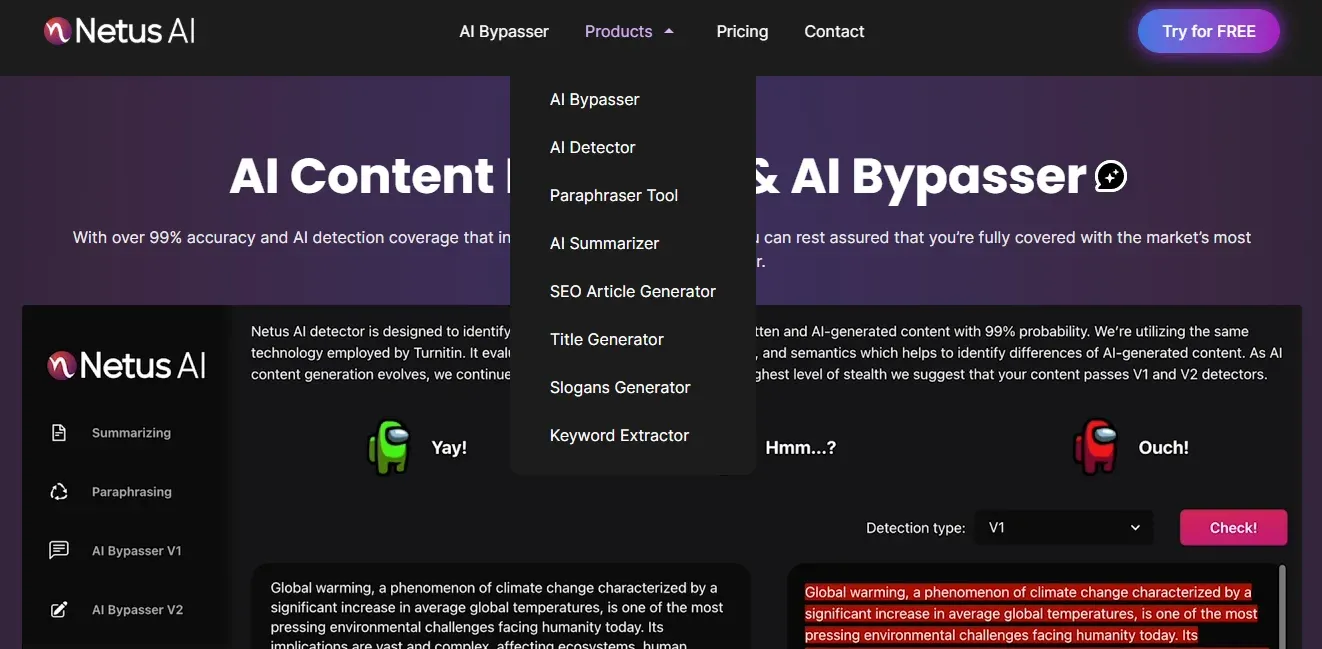
Balancing informative and persuasive writing in your plan requires flexible tools. Resources in NetusAI’s kit, for example, AI Bypasser/Detector, Paraphrase Tool, Summarizer for AI, SEO Article Generator, Title Generator, Slogan Maker, and Keyword Extractor, are designed as a helpful community for professionals who do a lot of writing.
Maybe you are a content creator looking for a top place in results using Article Generator, or an SEO planner aiming to spy on the competition with Keyword Extractor, or a copywriter needing high engagement with Bypasser.
These tools help you switch apps less and do tasks better, allowing your team to spend less time making first drafts and more time on larger digital goals and being creative. With such smooth compatibility, every part, whether a short, three-word slogan or an article of over 2,000 words, is made ready for what you need.
Some thoughts for the end
Copywriting and content writing are both sides of the digital marketing coin. Copywriting is short, quick, and concentrated, aiming for results (like conversion). Content writing is a longer, step-by-step approach, aiming to build respect and trust.
If you know a unique purpose for every job and add useful tools to make both faster and better quality content, businesses and marketers can create an online presence that is dynamic, attracts much more organic traffic, and is also able to convert many visitors into repeat clients.
FAQs
What difference is there between an SEO content writer and a copywriter?
An SEO content writer mainly focuses on creating long-form, highly optimized articles, blogs, or guides with keywords, intending to appear in top positions in search engines to help attract more organic visitors and establish topic expertise. A copywriter works on shorter, more persuasive content, such as email messages, ad texts, and landing page texts, which aim to prompt a user to make a quick conversion or take some action.
Does a good content writer need SEO skills?
Yes, completely. Although the main aim is to inform and bring value, if content is not well optimized with relevant keywords, a decent heading structure, and internal links, then you lack the ability to connect to your desired audience in search engines. Knowledge about SEO is the basis for writing good content in the current digital environment.
Do I need to first get a copywriter or content writer when I make a new website?
When you make a new website, both are eventually needed, but which to choose first depends on what you want first. If the main goal is to build organic recognition and increase traffic, you have to look for a content writer to write for you. If you already have traffic (like from paid advertisements) and need to sell more right now, put a copywriter first for the landing or sales page. Sometimes it means you want somebody who can do both tasks at first.
Is an AI tool enough to replace a copywriter and content writer now?
No, not at this level. While platforms such as SEO Article Generator or Paraphrase Tool become very effective for making you work faster, researching, and even drafting, it is not possible for them to take the place of creative planning, emotional skills, original brand voice creation, and detailed decisions, which are a must for top content and copywriting. The future is more of a joint approach with human creativity and AI's fast efficiency.
How do you compare content writing and copywriting for success?
Ways to judge success are much different between the two. Copywriting checks conversion rates (number of people who click and buy or sign up), click-through rate, and direct sales revenue. Content writing is measured by how much organic audience visits your page, keyword rank, how long someone stays on the page, how often a person leaves without reading more, and how much your content is shared on social media. All these factors help you grow a brand for the long term and build a position as an expert.