Writers along with academic folks and students really need to steer clear of plagiarism and copyright infringement. They do this to maintain solid academic integrity in their work.
These two concepts often come across as pretty much the same thing. But there is a clear distinction that sets them apart. This piece lays out what plagiarism involves and what copyright infringement means.
It also offers practical ways to dodge both issues. All of that helps highlight the key differences between them.
Understanding plagiarism
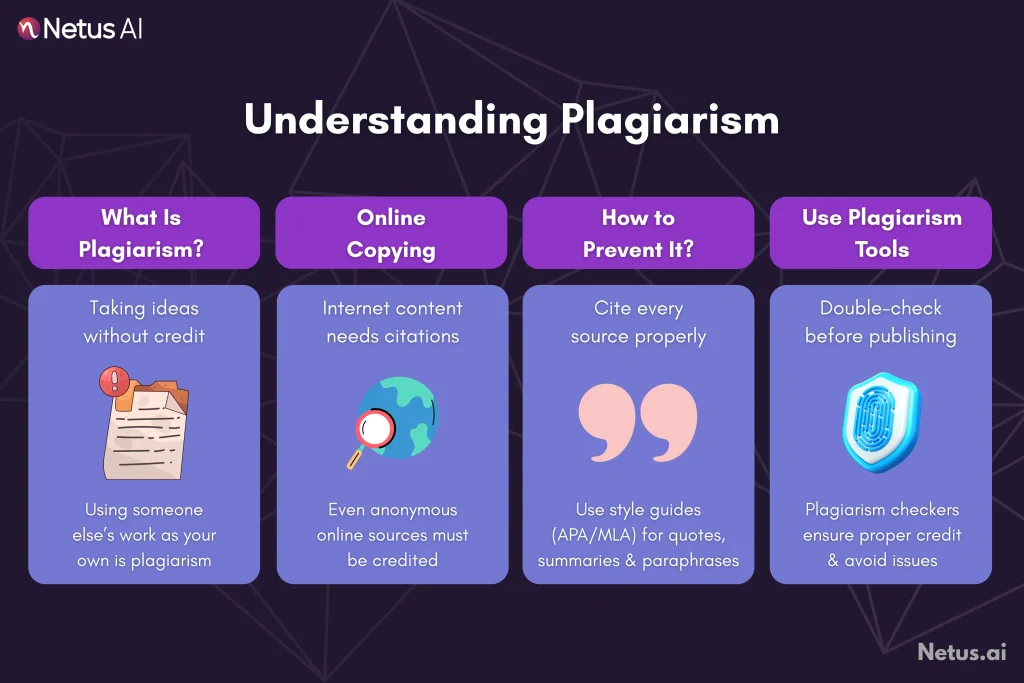
Plagiarism means taking someone else’s words or ideas and acting like they are your own without giving the right credit.
This idea shows up in school assignments and also in all sorts of creative stuff like paintings, songs or even plays. The thing is, whenever you pull content from another place and fail to mention where it came from, that counts as plagiarism.
Plagiarism: Copying material from the internet
Taking stuff from the internet and not giving proper credit to the original source counts as plagiarism. Even when you deal with anonymous content online, skipping the citation still makes it plagiarism.
Preventing plagiarism
You really need to cite every bit of source material right if you want to steer clear of plagiarism. That goes for summaries and paraphrases too. Make sure to always put quotes around direct stuff and cite them. Guides like MLA or APA citations push for citations on those summaries and paraphrases as well. Get familiar with whatever style guide you are using so you do not run into plagiarism issues.
Running your work through a plagiarism checker helps a lot to stop that from happening. It makes certain you give credit where it is due and cite sources properly.
Copyright infringement defined
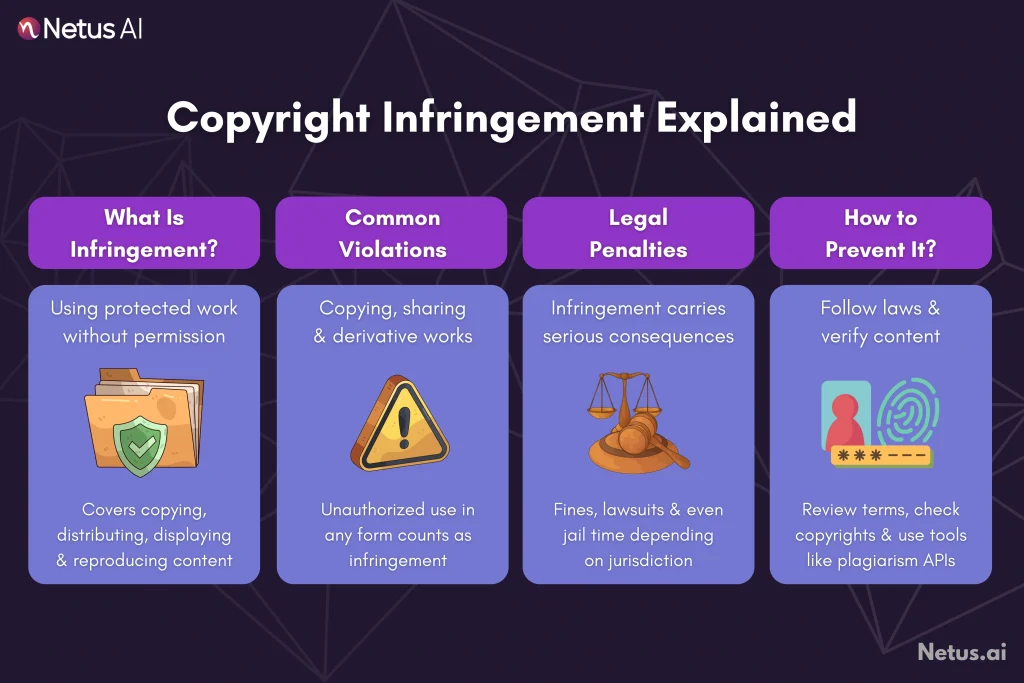
Copyright law helps protect the intellectual property that belongs to creators. This includes writers, artists, publishers and producers.
It keeps their copyrighted works safe from harm. So, any use, distribution or reproduction of that material without permission really counts as copyright infringement.
Understanding copyright infringement
Copyright infringement shows up in all sorts of ways. It often involves reproducing or copying someone else’s content without any real authorization. Distributing that same copyrighted material to others is another common issue.
Copyright infringement: Legal ramifications
Copyright infringement brings some pretty heavy penalties. It can lead to time in prison or having to pay out damages to the copyright owner. That owner might even take the person who infringed to court to get financial payback.
Copyright laws differ quite a bit depending on where you are. Owners sometimes spell out the infringement details right in their legal paperwork. That makes it essential to really grasp the guidelines the owner lays out on copyright. You can get a straightforward document from the copyright office. It covers all the rules and regs for reproducing or using the material.
Combating copyright infringement
Dealing with copyright infringement means you really need to get a solid grasp on the relevant laws. You should always review the terms and conditions, look into copyright details and run a plagiarism checker on whatever content you put out there.
Plagiarism vs. copyright: Understanding the distinctions
Infringement
Plagiarism basically means you take someone else’s work and act like it is yours, without mentioning where it came from. That sort of thing does not usually count as breaking the law in a formal way.
Copyright infringement goes further, since it involves using protected creative material without getting permission, often to benefit yourself financially. Courts tend to punish that with real legal consequences most of the time.
In the end, both practices rely on borrowing ideas or content from others without their approval. The key difference shows up in how the law treats each one.
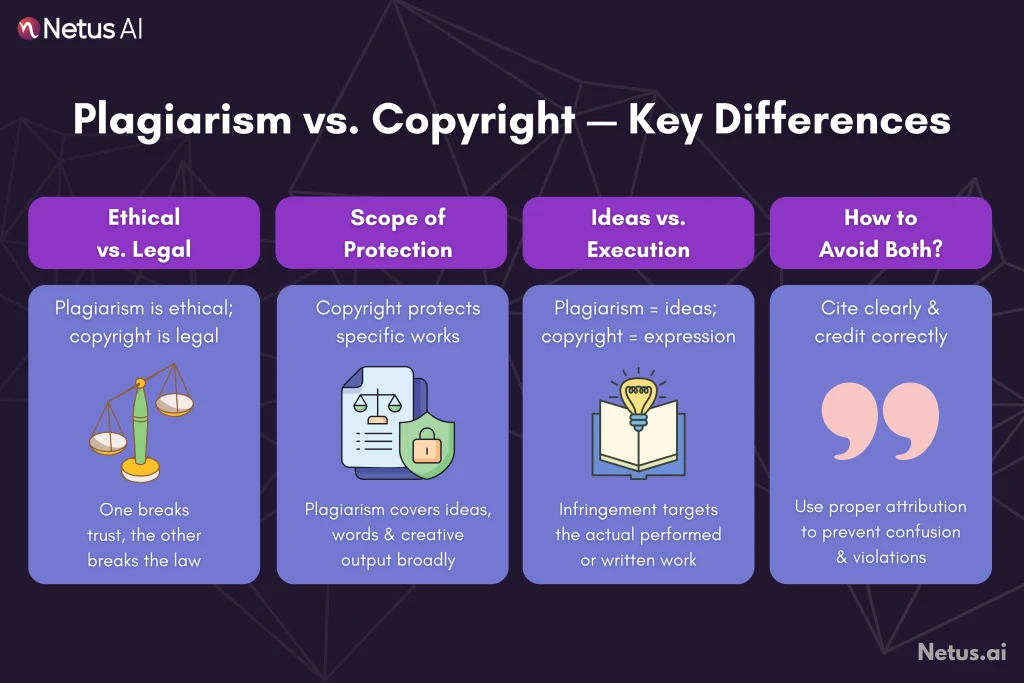
Here’s a breakdown of the differences between plagiarism and copyright infringement:
- Ethical vs. legal: Plagiarism tends to be viewed as an ethical issue at its core. Copyright infringement deals with legal boundaries instead.
- Scope of protection: Copyright infringement really zeros in on materials that fall under copyright protection. Plagiarism works a bit differently. It can cover just about any sort of creation out there.
- Ideas vs. execution: Plagiarism often goes beyond just words. It can involve copying ideas in general. Copyright infringement targets something more specific. That means using the actual expressed or performed version of those ideas without permission.
Preventing plagiarism and copyright infringement
It’s important to get a handle on the different rules for plagiarism and copyright infringement. You really don’t want to confuse the two.
Either one can seriously hurt your standing with others. That means you should take care whenever you draw from outside materials in school projects or on the job. Just stick with solid methods for giving credit and proper citations.
Crediting sources and citing AI usage
When incorporating content from external sources, it is essential to adhere to proper attribution guidelines. This ensures academic integrity and acknowledges the original creators.
Key principles:
- Acknowledge the original source: Always provide credit to the source from which the content was obtained.
- Specify creator and origin: Clearly identify who created the content and where it originated.
- Utilize standard citation styles: Employ established citation formats such as APA, MLA or Chicago to maintain consistency and clarity.
- Hyperlink when possible: Where applicable, include hyperlinks to directly link readers to the source material.
Crucially, any content created with the assistance of artificial intelligence must disclose its use through proper citation.
Content starts at generation
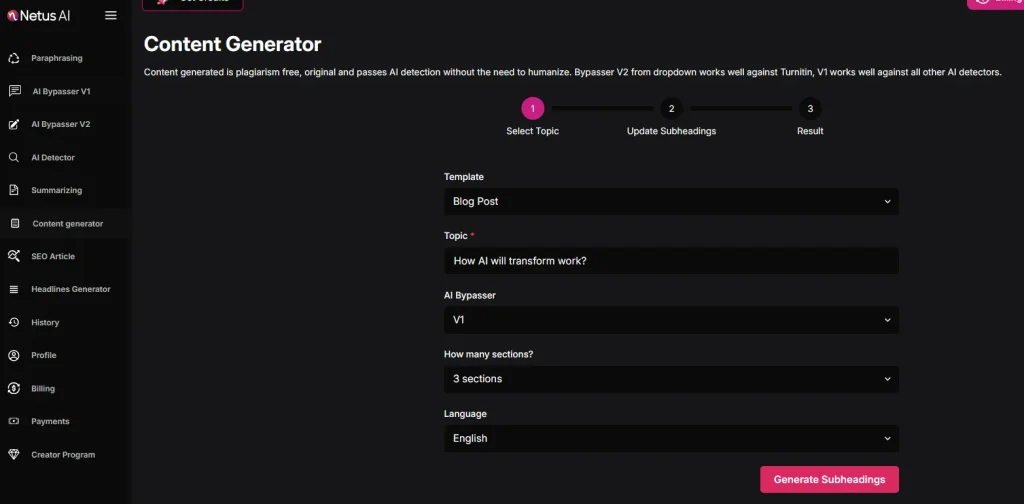
NetusAI offers a content generator that produces plagiarism-free content. Users can generate, download, copy and view their content history on the user-friendly NetusAI page.
NetusAI efficiently rewrites and generates high-quality, SEO-optimized articles from scratch or existing ideas, saving time without compromising trust.
Final thoughts
Plagiarism pretty much comes down to grabbing someone else’s work and passing it off as your own. You do that without giving the original creator any kind of credit. Copyright infringement works in a different way. It happens when you use material that’s protected and you copy or share it without getting permission first.
Both problems can damage a person’s reputation in their professional area quite a bit. They tend to cause serious consequences too. Things like getting into court fights or losing out on important chances.
Once you figure out the main differences between these approaches, you can build solid routines like citing sources properly and using plagiarism detection tools. People then stay honest in their schoolwork or jobs. They show respect for what others create. And they ensure their own output comes across as original and handled correctly.
FAQs
Does plagiarism apply only to academic work?
Plagiarism shows up in academic settings for sure. But it also touches creative fields pretty much everywhere. That includes stuff like artwork, music pieces and dramatic plays too.
What does copyright law safeguard?
Copyright law takes care of the intellectual property that creators come up with. That covers writers and artists, along with publishers and producers in this context. It basically operates by shielding their copyrighted materials from any kind of unauthorized copying or use.
Can copyright infringement take various forms?
Yeah, it pretty much includes copying content without asking permission ahead of time. That covers sharing copyrighted material with other people too. You could wind up displaying or performing protected works in public. Or you might create fresh versions drawn from those original pieces.
What are the legal consequences of copyright infringement?
People that break copyright laws end up dealing with some heavy legal consequences. Those consequences cover things like potential prison sentences. They also involve hefty financial payments made right to the copyright holder.
Copyright laws change a lot depending on the location. Owners tend to spell out their specific rules about infringement directly in the legal documents. It is essential to fully understand the precise terms that the owner has provided.