The industry, which is constantly transforming, is seriously affected when there is an update to Google’s algorithm. But this recent change is causing a major transformation, as the company does not look only at whether a text was made by AI, but puts the main focus on content and its usefulness. Through this, Google creates no confusion anymore. So, it's important to know what works and what gets penalized?
For a long period, the SEO world has discussed whether Google can or would punish content made by AI. Now, since Google has broadened its rules, that argument is finished. Usefulness is now the top priority. If your writing does not show new ideas, lacks expertise, or is only repeating old information, who or what makes it (human or computer) does not matter anymore.
The shift from detection to utility
These new rules mark a significant shift in Google’s focus on quality. Previously, there were updates that targeted spam, but this new approach is broader, involving any kind of writing created primarily to win better spots on search engines rather than to truly help users.
Since generative AI tools have become powerful, it has become possible to generate huge amounts of text very quickly, which has led to an abundance of low-quality content online. People searching often do not find useful information these days. Because of that, Google's move protects its important work: providing results that are trustworthy and of high quality.
Now, this situation calls for SEO professionals to seriously change their plans. Churning out hundreds of AI-made blog posts is not safe. There has to be more focus on whether the content is good, and using AI only to help, not to depend solely on it.
Adapting your content strategy in a new era
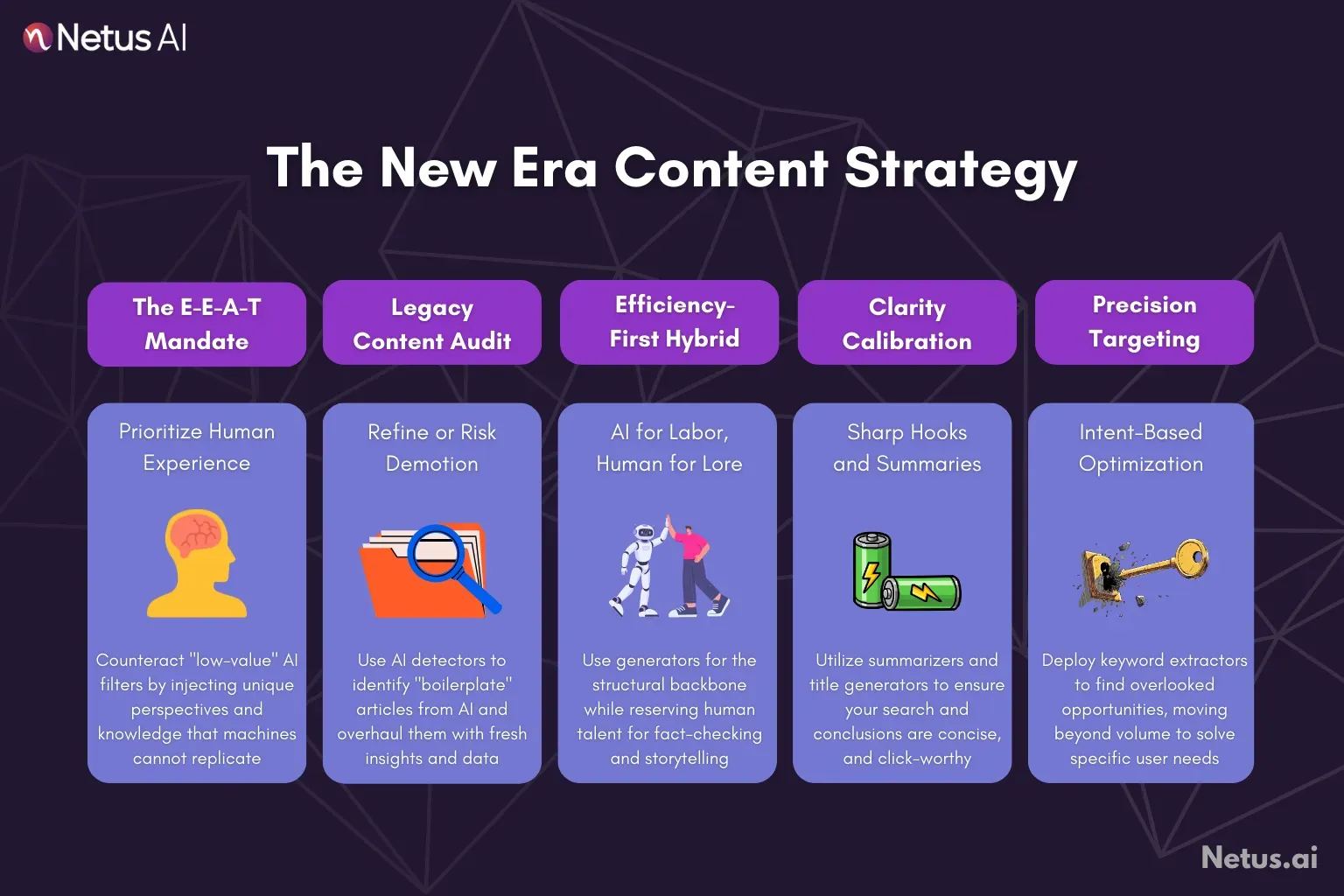
So, the new rules require writers to plan and act early on their writing strategies. Those who ignore them risk their websites dropping in search rankings. There are important things the creative team and SEO people must do immediately:
Focus on originality and expertise
Google now rewards E-E-A-T, which stands for Experience, Expertise, Authoritativeness, and Trustworthiness. This is like medicine for “low-value” work. Your articles have to show a unique angle, with practical experience or special know-how that AI cannot easily copy. In such cases, human editors and professionals who know their fields are truly needed.
Auditing and refining existing content
For those who use AI systems to quickly fill up their sites, a thorough content check is important. Any blog that just takes something from somewhere and says it again in a new way is now dangerous for your website. But before throwing these texts away, fix them and add more value from humans.
If you look at what you posted before, maybe in the early days of AI tools, and think some parts miss the right touch or do not look original enough, then you can use an AI detector, which works like a test for such texts. This shows which parts Google might call low quality because of being too obvious or missing small details. When you find these, making them better is needed.
Maybe some parts need to be made totally new to improve richness and provide an original angle, but their general ideas are still good. So, you can use a paraphrasing tool, which helps you rewrite and change sentence forms while incorporating more knowledge from people. It turns plain text into something more individual and interesting, stopping it from being seen as just repetition of less value.
Using AI for efficiency, not replacement
It does not say not to use AI at all, but to use it in the correct way. Let AI do jobs that are mechanical and repetitive, so that people can use their time for studying, making creative changes, and providing a better final check.
If you are starting a new write-up, an SEO article generator can help with creating outlines and main body writing centered around your selected words. This reduces the time spent making the base. What comes as the real thing later is human editing: checking facts, adding your own numbers or stories, and making sure the writing really has all the E-E-A-T points.
In fact, long stories or reports are difficult to keep in order. Before sharing your final version, you can use an AI summarizer, which will help make your intro and ending stronger and ensure the important message of your writing is conveyed directly. This is a key part of high-quality work, making things clear and concise.
If you want people to visit your page, you need a good beginning, too. Title generator tools help to make many headline ideas very quickly, and if you mix these with a good meta description, more people will click, this adds important value and helps Google see that your writing is useful for what users search for.
Also, knowing who your reading audience is has to begin with learning what they want to find. You can use a keyword extractor for other popular blogs or your old posts to learn useful, maybe ignored, longer search words so you can update your writing not just for large numbers but for special topics that are looked for by the right people.
NetusAI: One method for handling content quality
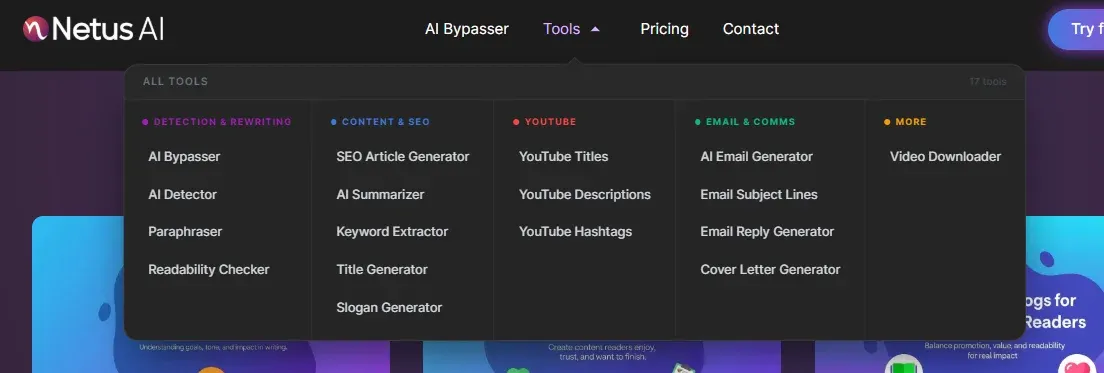
Since Google's rules have grown more complicated, content teams usually require not just one tool but a full collection, which can lead to some workflow slowdowns and things not always matching. Using disconnected platforms for SEO research, drafting, and quality checking often results in fragmented data and inconsistent quality.
There are different tools from NetusAI, including AI detectors, paraphrasing tools, SEO article generators, and AI summarizers. This integrated workflow helps people keep making good, Google-approved content consistently and on a large scale by combining efficiency with human-led quality control. By centralizing these functions, teams can ensure that every piece of content adheres to E-E-A-T standards while maintaining high production volumes.
Closing ideas
When Google increases its low-value content rules, people sometimes misunderstand it as being against AI, but actually, it’s about trying to keep the quality high in search results. The main point is that the top purpose for making content is and remains helping the people who read it.
A strong plan for SEO in 2026 and later uses AI for dynamic parts but makes sure that human standards for quality, original ideas, and expertise are followed closely. Change fast, try to provide high value, and use wise software to keep your content performing under the new system.
FAQs
What does Google mean by “low-value content” when applying this rule?
Google says low-value content is material, no matter if it is written by AI or a human, that does not give users much, if any, new value, insight, or knowledge. Usually, this type is repetitive, template-like writing; text that was only written to change search rankings or just a page collecting info that was already easy to find in other places. They look at what helps the reader, if the text does not help in a clear way or prove authority, then it is low-value content.
Does this mean all AI-written content is now in trouble with Google rules?
The answer is no because Google keeps saying its system is not set up to give a penalty simply when content is made with AI. It punishes low-value content, not AI-made work itself. If you use AI for creating articles that are accurate and unique, show E-E-A-T, and help the reader, then it matches what Google wants. The thing is that humans need to check, edit, and guide the process.
How can one put E-E-A-T (Experience, Expertise, Authoritativeness, Trustworthiness) into something an AI started?
To have more E-E-A-T, human editors should add things only they own, examples from real life, their own photos, personal details and comments that show special knowledge inside what AI wrote. The background of the writer or senior aids should be clear. The final article must better normal short summaries by sharing new tips and advice that come from real experience and cannot come from just AI writing.
Is using a paraphrase tool to change up old articles a good idea so they do not look like low-value content?
Trying a paraphrase tool just to change words in old content without adding new facts or a deeper explanation is actually the habit Google is warning against. It might give you some different wording, but it does not really fix the base issue of not providing enough value. Paraphrasing works best only if it is mixed with real editing where experts update, add, and reinforce what is inside the content.
What should SEOs do right away after reading this new advice?
The fastest step is checking all your content, especially two things: material made in large amounts with generative AI but little checking by real people, and any piece that does not do well even though it uses proper keywords. These have the most risk and need to be upgraded with valuable human input or, if not fixable, taken down from search completely.